
Mattress thickness is more than just a number and it shapes how well you sleep each night. Many people think any mattress will do but studies show thinner mattresses under 10 inches often leave adults tossing and turning from lack of support. The surprise is that picking the right thickness can be the difference between waking up stiff and waking up refreshed.
Table of Contents
- What Is Mattress Thickness And Why It Matters?
- The Importance Of Mattress Thickness For Sleep Quality
- How Mattress Construction Affects Thickness
- Exploring Different Mattress Thickness Options
- Choosing The Right Mattress Thickness For Your Needs
Quick Summary
| Takeaway | Explanation |
|---|---|
| Choose mattress thickness based on body weight. | Heavier individuals need thicker mattresses for proper support, while lighter ones may prefer thinner options. |
| Consider sleeping position for optimal comfort. | Side, back, and stomach sleepers have distinct thickness needs affecting spinal alignment and pressure distribution. |
| Age affects mattress thickness preferences. | Older adults or those with joint issues typically benefit from thicker mattresses that provide additional cushioning and support. |
| Mattress construction influences overall thickness. | The combination of support core, transition layer, and comfort layer determines both the mattress’s height and its comfort level. |
| Personalize choices based on health conditions. | Existing health issues may require specific thicknesses to ensure necessary support and alleviate discomfort during sleep. |
What is Mattress Thickness and Why It Matters?
Mattress thickness represents the total vertical height of a mattress, measured from its base to its top surface. This seemingly simple measurement plays a crucial role in determining sleep quality, comfort, and overall body support. Understanding mattress thickness goes beyond just selecting a random number.
Understanding Basic Mattress Thickness Ranges
Mattress thickness typically ranges between 8 to 14 inches, with variations depending on individual needs and preferences. Different thickness levels correspond to specific sleep requirements and body characteristics:
- Thin Mattresses (8-10 inches): Suitable for children, lightweight individuals, or guest rooms
- Standard Mattresses (10-12 inches): Best for average-weight adults and most sleeping positions
- Thick Mattresses (12-14 inches): Ideal for heavier individuals, side sleepers, and those needing extra cushioning
Why Mattress Thickness Significantly Impacts Sleep Quality
The right mattress thickness directly influences spinal alignment, pressure point relief, and overall comfort. According to Sleep Research Foundation, mattress thickness affects how effectively your body weight is distributed and supported during sleep.
Your body weight, sleeping position, and personal comfort preferences determine the optimal mattress thickness. Buying A New Mattress Comfortable and Stylish becomes easier when you understand how thickness correlates with individual sleep needs.
Heavier individuals generally require thicker mattresses with more substantial support layers, while lighter individuals might find thinner mattresses more comfortable. Side sleepers typically benefit from mattresses with additional cushioning to prevent pressure points around shoulders and hips.
Ultimately, mattress thickness is not a one-size-fits-all solution but a personalized choice that significantly impacts sleep quality and overall well-being.
The Importance of Mattress Thickness for Sleep Quality
Mattress thickness plays a pivotal role in determining overall sleep comfort, body support, and long-term spinal health. While many people overlook this critical factor, choosing the right mattress thickness can significantly impact sleep quality and physical well-being.
The Science Behind Mattress Support and Thickness
Every mattress comprises multiple layers designed to distribute body weight and provide support. According to medical research, mattress thickness directly correlates with pressure point relief and spinal alignment. The ideal thickness depends on several key factors:
- Body Weight: Heavier individuals require thicker mattresses for adequate support
- Sleeping Position: Side, back, and stomach sleepers have different thickness requirements
- Age and Physical Condition: Older adults or those with joint issues need more cushioning
How Different Mattress Thicknesses Impact Sleep
Thin mattresses (8-10 inches) often lack sufficient support for adults, potentially causing discomfort and disrupted sleep. Medium-thickness mattresses (10-12 inches) provide balanced support for most body types, while thicker mattresses (12-14 inches) offer enhanced cushioning for those with specific comfort needs.
Bed Sets That Redefine Comfort and Luxury can help you explore mattress options that match your specific sleep requirements.
Physical conditions like chronic back pain, arthritis, or muscle tension can be significantly influenced by mattress thickness. A mattress that is too thin might not provide enough cushioning to alleviate pressure points, while an overly thick mattress could create improper spinal alignment.
Ultimately, selecting the right mattress thickness is a personalised decision that requires understanding your unique physical needs, sleeping preferences, and comfort requirements. The goal is to find a mattress that supports your body, promotes proper alignment, and ensures restful, rejuvenating sleep.
How Mattress Construction Affects Thickness
Mattress construction is a sophisticated process involving multiple layers that collectively determine the overall thickness, comfort, and support. Understanding mattress construction reveals the intricate design behind every mattress.
Core Layers of Mattress Construction
Typically, mattresses comprise three primary layers, each contributing to the total thickness and performance:
- Support Core: The foundational layer providing structural integrity
- Transition Layer: Bridging the support core and comfort layers
- Comfort Layer: The topmost section responsible for immediate cushioning
The thickness and material composition of these layers significantly influence the mattress’s overall performance, durability, and comfort level.
This table outlines the three primary layers of a mattress and how each layer influences overall thickness and comfort.
| Mattress Layer | Description | Impact on Thickness & Comfort |
|---|---|---|
| Support Core | Base layer providing structural support | Major contributor to height, affects durability and support |
| Transition Layer | Middle layer bridging support and comfort | Adds extra cushioning, impacts pressure relief |
| Comfort Layer | Top layer for immediate softness | Determines plushness and initial feel, enhances comfort |
Material Variations and Their Impact
Different mattress materials contribute uniquely to thickness and support. Memory foam layers tend to be denser and can add substantial height, while innerspring mattresses might have thinner comfort layers with more prominent support cores. Spring vs Foam Mattress: Best Choice for Gauteng provides deeper insights into material differences.
Latex, for instance, offers consistent density and can maintain thickness more effectively than traditional foam. Hybrid mattresses combine multiple materials, creating complex layer structures that optimize both support and comfort.
The quality of materials directly influences how well a mattress maintains its thickness over time. High-density foams and premium springs resist compression, ensuring the mattress retains its original shape and support characteristics for longer periods.
Understanding these nuanced construction details helps consumers make informed decisions about mattress selection, recognizing that thickness is not just about height but about the sophisticated interplay of materials and design.
Exploring Different Mattress Thickness Options
Understanding mattress thickness options reveals a spectrum of choices designed to accommodate various sleep preferences, body types, and comfort requirements. These options range from low profile to luxuriously thick mattresses.
Categorizing Mattress Thickness Levels
Mattress thickness can be systematically classified into three primary categories
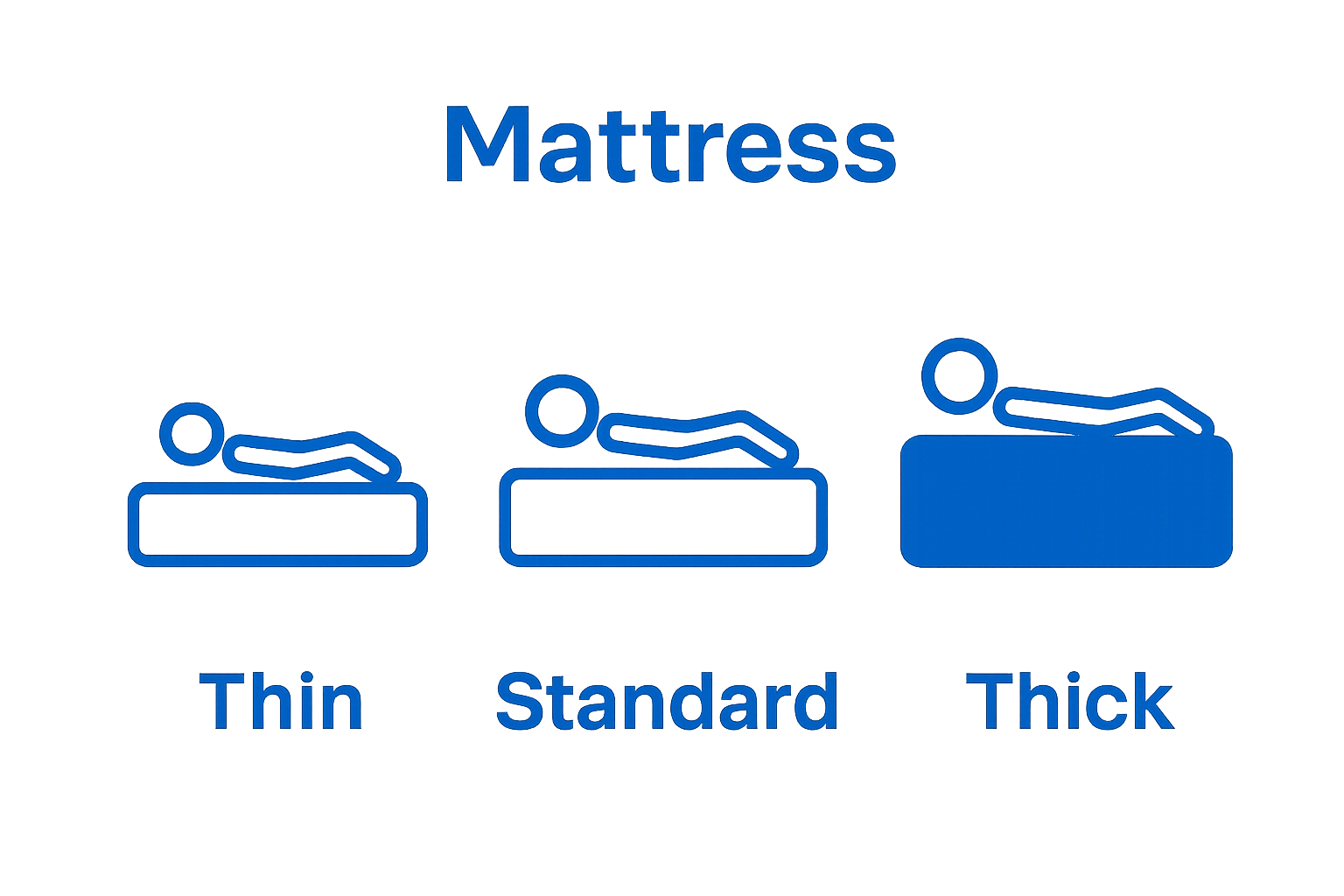 :
:
- Low Profile (6-8 inches): Ideal for children, lightweight individuals, and guest rooms
- Standard Thickness (8-12 inches): Suitable for average-weight adults and most sleeping positions
- Thick/Deep Profile (12-18 inches): Perfect for heavier individuals, side sleepers, and those needing extra support
Matching Mattress Thickness to Individual Needs
Selecting the appropriate mattress thickness involves considering multiple personal factors. Body weight plays a crucial role in determining the ideal mattress thickness. Heavier individuals typically require thicker mattresses with more robust support layers to prevent uncomfortable sinking and maintain proper spinal alignment.
Beds That Transform Your Sleep: Ultimate Comfort Awaits can help you discover mattress options tailored to your specific requirements.
Sleeping position also significantly influences mattress thickness selection. Side sleepers often benefit from thicker mattresses with enhanced cushioning to alleviate pressure on shoulders and hips. Back and stomach sleepers might prefer medium-thickness mattresses that provide balanced support and prevent excessive sinking.
Additionally, age and physical condition impact mattress thickness preferences. Older adults or individuals with joint issues might require thicker mattresses that offer more cushioning and support, helping to reduce discomfort and promote better sleep quality.
Ultimately, mattress thickness is a personal choice that reflects individual comfort needs, physical characteristics, and sleep preferences. Careful consideration of these factors ensures selecting a mattress that provides optimal support and comfort.
The table below compares different mattress thickness categories, their ideal users, and primary features for quick reference.
| Mattress Thickness Category | Recommended For | Key Features & Benefits |
|---|---|---|
| Low Profile (6-8 inches) | Children, lightweight adults, guest rooms | Space-saving, affordable, easy to move, limited cushioning |
| Standard Thickness (8-12 inches) | Most adults, back & stomach sleepers | Balanced support, fits most bases, versatile comfort |
| Thick/Deep Profile (12-18 inches) | Heavier individuals, side sleepers, older adults | Extra cushioning, superior support, reduces pressure points |
Choosing the Right Mattress Thickness for Your Needs
Selecting the perfect mattress thickness requires careful consideration of personal sleep characteristics and physical requirements. The ideal mattress thickness is not a universal standard but a personalized decision.
Critical Factors in Mattress Thickness Selection
Multiple interconnected factors influence the optimal mattress thickness for an individual:
- Body Weight: Determines the level of support and cushioning needed
- Sleeping Position: Influences pressure point distribution and spinal alignment
- Age and Physical Condition: Impacts comfort and potential pain management needs
- Existing Health Conditions: Can require specialized mattress support
Personalizing Mattress Thickness Recommendations
Different body types and sleeping patterns demand unique mattress thickness approaches. Lightweight individuals (under 130 pounds) typically find 8-10 inch mattresses sufficient, providing adequate support without excessive sinking. Average-weight sleepers (130-230 pounds) often benefit from 10-12 inch mattresses that balance support and comfort.
Spring vs Foam Mattress: Best Choice for Gauteng offers additional insights into mattress material considerations that complement thickness selection.
Heavier individuals weighing over 230 pounds require mattresses 12-14 inches thick with robust support cores to prevent excessive compression and maintain proper spinal alignment. Side sleepers generally need slightly thicker mattresses with more prominent comfort layers to cushion shoulders and hips, reducing potential pressure points.
People with specific health conditions like chronic back pain or arthritis might need specialized mattress thicknesses that provide targeted support. Consultation with healthcare professionals can offer personalized recommendations tailored to individual medical needs.
Ultimately, mattress thickness selection is a nuanced process balancing personal comfort, physical requirements, and long-term sleep health. Careful evaluation of individual factors ensures discovering a mattress that provides optimal support and restful sleep.

Discover Your Best Night’s Sleep with the Right Mattress Thickness
Struggling to find the perfect mattress thickness for your body and sleep style? Many people wake up feeling stiff or uncomfortable simply because their mattress is not suited to their weight, sleeping position, or comfort needs. This guide has shown how issues like spinal alignment and pressure relief are directly linked to choosing the right mattress thickness, whether you have a preference for a Three Quarter Mattress or need the flexibility of premium Foam Mattress options.

Ready for better, more refreshing sleep? Find your perfect match today by exploring quality, affordable beds at Comfy Beds. Our expert team will help you select the ideal mattress thickness for your unique needs. Shop now and enjoy factory-low prices on trusted brands. Your great night’s sleep starts here.
Frequently Asked Questions
What is the ideal mattress thickness for side sleepers?
A thickness of 12-14 inches is often recommended for side sleepers, as it provides additional cushioning for the shoulders and hips, helping to alleviate pressure points and support spinal alignment.
How does my body weight affect the type of mattress thickness I should choose?
Heavier individuals typically require thicker mattresses (12-14 inches) with robust support layers to prevent excessive compression, while lighter individuals may find that thinner mattresses (8-10 inches) offer adequate support without excessive sinking.
Can the thickness of a mattress impact sleep quality?
Yes, mattress thickness significantly impacts sleep quality by influencing spinal alignment, pressure point relief, and overall comfort. Choosing the right thickness based on personal needs can lead to better sleep and physical well-being.
What are the different layers that contribute to mattress thickness?
Mattress thickness typically consists of three primary layers: a support core (for structural integrity), a transition layer (to bridge support and comfort), and a comfort layer (which provides immediate cushioning). The thickness and materials of these layers affect overall comfort and performance.
