
Most people think choosing between a double or queen bed is just about picking a size that fits your room. Think again. Did you know a queen bed is 15 cm wider than a double, yet that small difference can completely change your quality of sleep and even your mood? You might be surprised to find out the extra width is not just about space, it can actually make or break how well you sleep next to someone else.
Table of Contents
- What Are Double And Queen Beds?
- Why The Size Difference Matters
- How To Choose The Right Bed For Your Needs
- Key Features Of Double And Queen Beds
- Understanding Bed Dimensions And Their Impact
Quick Summary
| Takeaway | Explanation |
|---|---|
| Double beds are 137 cm wide. | This size is suitable for single adults or two smaller individuals but may feel cramped for couples. |
| Queen beds offer more space at 152 cm. | The extra width is ideal for couples, enhancing sleep comfort and reducing disturbances during the night. |
| Choose based on room size and preferences. | Assess your bedroom dimensions and personal sleeping styles to determine the best bed size for your needs. |
| Consider lifestyle changes when choosing. | Your future living arrangements or relationship status may influence which bed size is most appropriate for you. |
| Larger beds can improve overall well-being. | Enhanced comfort from wider beds can lead to better sleep quality and reduced physical discomfort during rest. |
What are Double and Queen Beds?
Beds are more than just furniture pieces where you rest at night. They represent personal spaces of comfort, relaxation, and individual sleeping preferences. When exploring bed sizes like double and queen, understanding their specific characteristics becomes crucial for making an informed purchasing decision.
Defining Bed Sizes
Double beds and queen beds are two popular mattress sizes that serve different spatial and comfort requirements. Exploring bed size options reveals nuanced differences that can significantly impact your sleeping experience.
A double bed, traditionally known as a standard double or full bed, typically measures 137 cm wide by 188 cm long. This size works well for single adults or teenagers who prefer more sleeping space than a single bed offers. The double bed provides ample room for one person and can occasionally accommodate two smaller individuals, though it might feel somewhat cramped.
Comparing Bed Dimensions
In contrast, a queen bed offers more generous dimensions, measuring approximately 152 cm wide by 188 cm long. According to Sleep Foundation research, queen beds provide additional width compared to double beds, making them ideal for couples or individuals seeking more personal sleeping space.
Key differences between double and queen beds include:
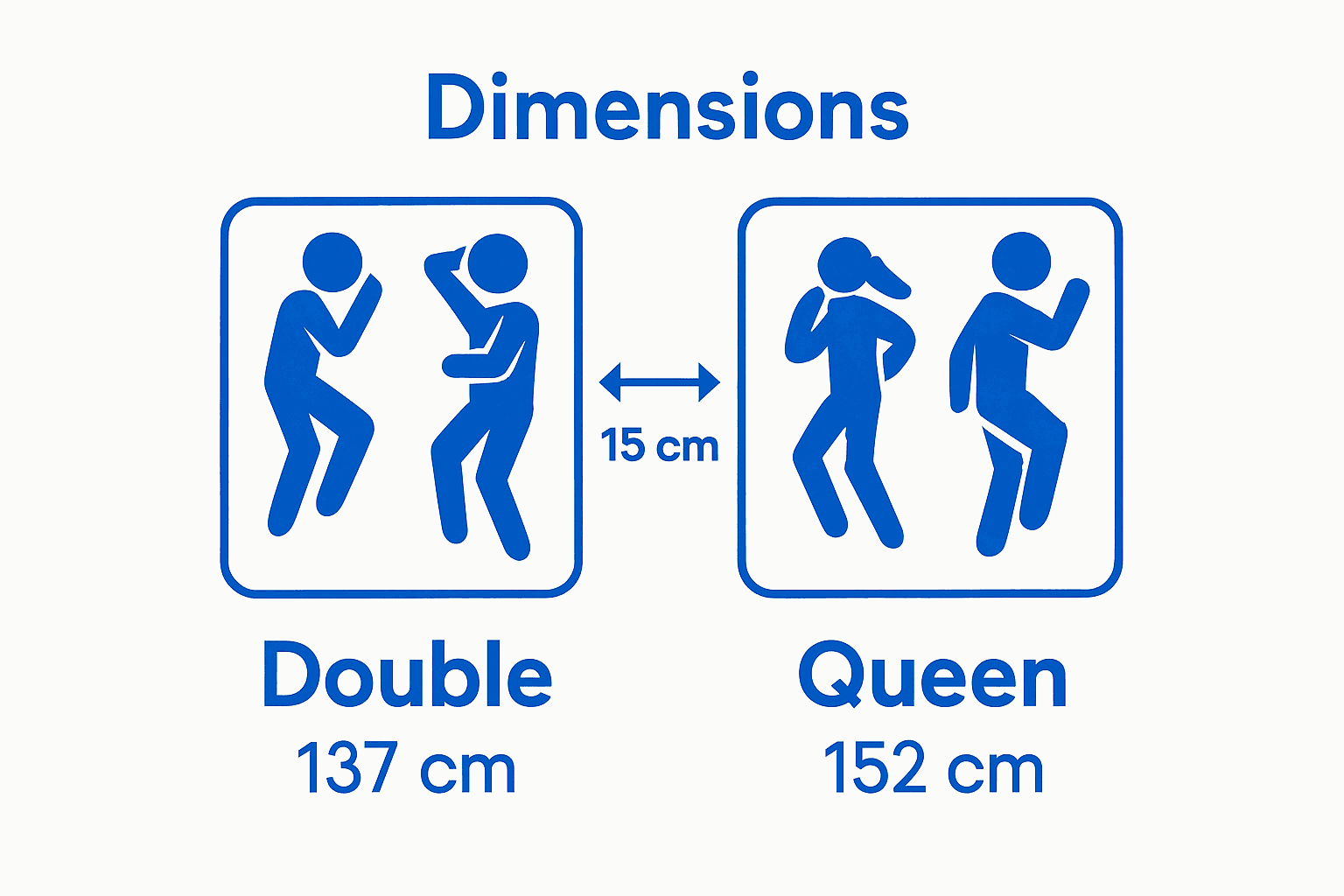
- Width variation (double: 137 cm, queen: 152 cm)
- Suitability for different sleeping arrangements
- Room space requirements
- Comfort levels for single and partnered sleepers
Choosing between a double and queen bed depends on several factors such as room size, personal sleeping preferences, budget, and the number of people using the bed. While a double bed might suffice for a single person or a compact bedroom, a queen bed offers more flexibility and comfort for couples or those desiring extra space.
Understanding these subtle yet significant differences helps you select the most appropriate bed size for your specific needs and living environment.
Below is a comparison table outlining the primary differences between double and queen beds, including dimensions, suitability, comfort, and recommended situations to help you decide which option fits your needs best.
| Feature | Double Bed | Queen Bed |
|---|---|---|
| Width | 137 cm | 152 cm |
| Length | 188 cm | 188 cm |
| Suitable For | Single adults, teenagers | Couples, single adults wanting space |
| Comfort Level (For Couples) | Can be cramped | Spacious, reduced disturbance |
| Space Requirement | Compact bedrooms, smaller spaces | Larger bedrooms, more room needed |
| Movement Freedom | Limited when shared | Easier movement for both |
| Lifestyle Considerations | Temporary, solo occupants | Long-term, potential future sharing |
Why the Size Difference Matters
The seemingly modest size variation between double and queen beds can profoundly impact sleep quality, personal comfort, and room functionality. Understanding these nuanced differences helps individuals make more informed bedding decisions tailored to their specific living environments.
Sleeping Comfort and Space Allocation
Bed size directly influences personal sleeping experience and spatial dynamics. Bedroom space planning research suggests that selecting the appropriate bed size can significantly enhance overall room aesthetics and personal comfort.
A double bed typically provides adequate space for single adults but can feel restrictive for couples. Its 137 cm width offers limited personal space, which might lead to disrupted sleep if two individuals share the mattress. For individuals who move frequently during sleep or prefer additional room, the constraints become particularly noticeable.
Personal and Relationship Dynamics
Queen beds represent a strategic upgrade for those seeking enhanced sleeping arrangements. According to Sleep Research Institute, the additional 15 cm in width can dramatically improve sleep quality for partnered sleepers.
Key considerations when evaluating bed size impact include:
- Individual sleeping patterns
- Body size and movement during sleep
- Relationship dynamics and shared sleeping spaces
- Future lifestyle changes
The psychological and physical benefits of appropriate bed sizing extend beyond mere measurements. Comfortable sleeping arrangements contribute to better rest, reduced nighttime disturbances, and improved overall well-being. For couples, a queen bed offers sufficient space to minimize sleep disruptions caused by partner movements.
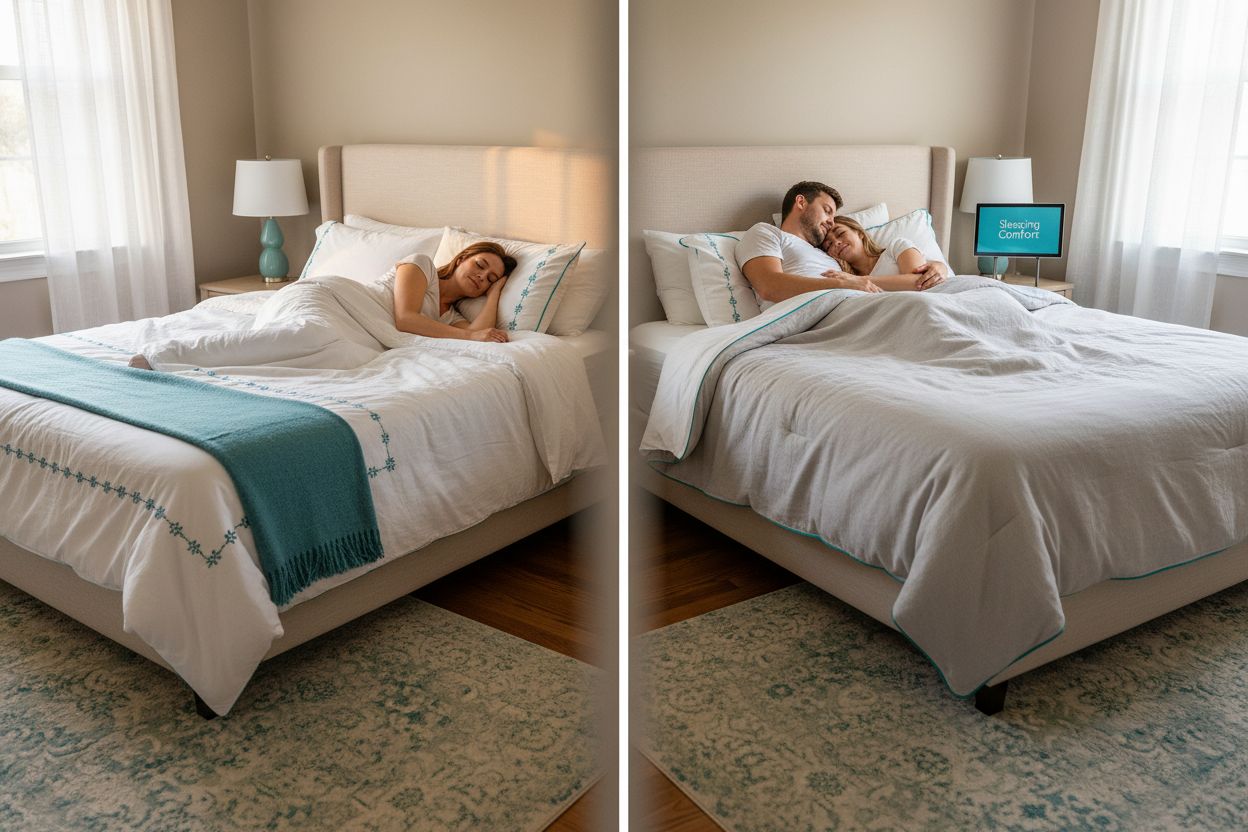
Room dimensions and furniture layout also play crucial roles in bed size selection.
A queen bed might overwhelm a compact bedroom, while a double bed could appear disproportionately small in spacious environments. Careful consideration of these factors ensures optimal bedroom functionality and aesthetic balance.
This table summarises key factors and considerations when deciding between a double and queen bed, making it easier to match your requirements and bedroom layout.
| Consideration | Double Bed | Queen Bed |
|---|---|---|
| Personal Sleeping Space | Adequate for one person | Extra room for singles or couples |
| Shared Sleeping Suitability | Possible but can feel restrictive | Highly comfortable for couples |
| Ideal Bedroom Size | Small to medium | Medium to large |
| Impact on Sleep Quality | May disrupt rest if sharing | Promotes better, undisturbed sleep |
| Future Proofing | Limited (may outgrow space) | Suitable for evolving circumstances |
How to Choose the Right Bed for Your Needs
Selecting the perfect bed involves a strategic blend of personal comfort, spatial considerations, and practical lifestyle requirements. A thoughtful approach ensures you invest in a sleeping solution that enhances your overall rest and living environment.
Assessing Personal Sleeping Requirements
Exploring mattress selection strategies reveals that individual sleeping habits play a crucial role in bed size selection. Consider your unique physical characteristics and sleeping patterns when evaluating between double and queen bed options.
For single individuals or those with limited bedroom space, a double bed might represent the most practical choice. Its compact dimensions work well for compact apartments, guest rooms, or teenagers’ bedrooms. However, individuals who are taller or prefer more sleeping space might find the 137 cm width restrictive.
Evaluating Room and Lifestyle Factors
According to Sleep Foundation research, choosing the right bed size involves multiple considerations beyond personal comfort. A comprehensive selection process should account for several critical factors:
- Current relationship status
- Potential future living arrangements
- Bedroom dimensions
- Budget constraints
- Long-term comfort needs
Couples or individuals anticipating shared sleeping arrangements will likely benefit from a queen bed’s additional width. The extra 15 cm provides meaningful space for comfortable coexistence, reducing nighttime disturbances and promoting better sleep quality.
Practical considerations extend beyond mere measurements. Room layout, furniture positioning, and overall aesthetic harmony should guide your decision. A bed that overwhelms or underwhelms your space can disrupt the entire bedroom’s visual balance and functionality.
Ultimately, selecting the right bed is a personal journey that balances practical needs with individual comfort preferences. By carefully evaluating your specific requirements, you can make an informed decision that transforms your sleeping experience.
Key Features of Double and Queen Beds
Beds are complex furniture pieces with nuanced design elements that significantly impact sleeping comfort and room functionality. Understanding the distinctive features of double and queen beds helps consumers make informed purchasing decisions tailored to their specific needs.
Structural and Dimensional Characteristics
Exploring mattress specifications reveals intricate differences between double and queen bed designs that extend beyond simple size measurements. Both bed types share fundamental structural similarities while presenting unique dimensional profiles.
A double bed typically features a compact frame measuring 137 cm wide, designed for efficient space utilization. Its standardized dimensions make it versatile for single sleepers or smaller bedrooms. The mattress construction usually prioritizes individual comfort, with medium-firm support that accommodates various body types.
Comfort and Support Specifications
According to Mattress Testing Institute, bed features extend far beyond mere measurements. Queen beds distinguish themselves through enhanced spatial and ergonomic considerations:
- Additional width for improved movement
- Greater support for couples
- Enhanced mattress thickness options
- More versatile frame designs
- Increased potential for customized comfort layers
Queen beds provide 15 cm more width compared to double beds, translating to meaningful improvements in sleeping experience. This extra space allows for reduced partner disturbance, improved body alignment, and greater overall sleeping comfort.
Material composition also plays a crucial role in bed performance. Modern double and queen beds incorporate advanced technologies like memory foam, hybrid constructions, and pressure-relieving materials. These innovations ensure that bed size selection involves more than dimensional considerations, encompassing comprehensive comfort engineering.
Ultimately, the choice between double and queen beds represents a personalized decision balancing spatial constraints, individual sleeping preferences, and long-term comfort requirements.
Understanding Bed Dimensions and Their Impact
Bed dimensions transcend mere physical measurements, representing a complex interplay between personal comfort, spatial dynamics, and lifestyle requirements. Understanding how bed sizes influence sleep quality and overall living environments requires a nuanced exploration of their multifaceted characteristics.
Spatial Considerations and Room Layout
Exploring bed size implications reveals that bed dimensions dramatically affect room functionality and aesthetic harmony. The width and length of a bed are not just numerical values but strategic design elements that shape living spaces.
A double bed’s compact 137 cm width creates specific spatial challenges and opportunities. In smaller bedrooms, this size allows for efficient furniture placement, enabling additional storage or movement space. However, for taller individuals or couples, these dimensions might feel restrictively narrow, potentially compromising sleeping comfort.
Health and Comfort Implications
According to Sleep Foundation research, bed dimensions directly correlate with sleep quality and physical well-being. The additional centimetres in a queen bed represent more than extra space they signify potential improvements in sleep hygiene:
- Reduced partner disturbance
- Enhanced body alignment
- Improved circulation during sleep
- Greater flexibility for different sleeping positions
- Accommodation of varying body types
Queen beds offer 15 cm more width compared to double beds, which might seem minimal but can significantly impact sleep quality. This extra space allows for reduced motion transfer, meaning movements by one partner are less likely to disturb the other’s sleep.
Psychological factors also play a crucial role in bed dimension selection. The perception of spaciousness contributes to mental relaxation, with larger beds often providing a sense of comfort and security. Individuals who feel constrained might experience increased stress and reduced sleep quality.
Ultimately, bed dimensions are a personal choice reflecting individual needs, physical characteristics, and lifestyle preferences. Careful consideration of these factors ensures a sleeping environment that supports both physical rest and emotional well-being.
Turn Your Sleep Decisions into Lasting Comfort
Have you discovered the clear differences between double and queen beds but still feel uncertain about choosing the right size for your sleep needs? Many South Africans struggle to find a bed that offers enough space for restful sleep without overpowering their room. The article highlighted how factors like personal comfort, shared sleeping space, and room dimensions all shape your decision. If you want a more comfortable and spacious night’s rest, now is the perfect time to act. Our Queen Size Beds collection brings the ideal blend of size and support to homes across the country at unbeatable factory-low prices.

Experience the difference real comfort makes. Visit Comfy Beds today or explore our full range of Queen Mattresses to find your match. Make the switch now so you can enjoy better sleep tonight and every night. Shop your perfect bed today before these deals pass you by.
Frequently Asked Questions
What are the dimensions of a double bed?
A standard double bed, also known as a full bed, typically measures 137 cm wide by 188 cm long.
How does a queen bed differ from a double bed in terms of size?
A queen bed measures approximately 152 cm wide by 188 cm long, providing an additional 15 cm in width compared to a double bed.
Who should consider a double bed over a queen bed?
A double bed is suitable for single adults or teenagers who prefer more space than a single bed offers and is ideal for compact bedrooms or smaller living spaces.
What are the benefits of choosing a queen bed?
A queen bed offers more space for couples or individuals who desire extra room while sleeping, enhancing comfort and reducing nighttime disturbances between partners.
