
Lower back pain can turn a simple night’s sleep into the toughest part of your day for millions of South Africans. Everyone argues about the firmness of a bed but here is something unexpected. A medium-firm mattress has been proven to reduce chronic lower back pain in more people than any other type—backed by clinical research. So maybe comfort is not about softness or price after all.
Table of Contents
- What Is The Best Bed For Lower Back Pain?
- Why Choosing The Right Bed Matters For Your Back Health
- How Different Mattress Types Support Your Lower Back
- Key Features To Look For In A Bed For Back Support
- Real-World Impacts Of Sleeping On The Right Mattress
Quick Summary
| Takeaway | Explanation |
|---|---|
| Medium-firm mattresses relieve lower back pain | Studies indicate that medium-firm mattresses provide optimal support and comfort, helping reduce chronic lower back pain effectively. |
| Personal factors influence mattress choice | Body weight and sleeping positions play crucial roles in determining the best mattress for an individual’s lower back support needs. |
| Proper spinal alignment is key | A supportive mattress maintains natural spinal alignment during sleep, preventing misalignment and associated discomfort over time. |
| Quality mattresses enhance overall health | Selecting the right mattress improves sleep quality, reduces pain, and can lead to better physical and mental well-being. |
| Zoned support technologies benefit users | Mattresses featuring zoned support provide tailored pressure relief and align the spine correctly, catering to different body regions effectively. |
What is the Best Bed for Lower Back Pain?
Lower back pain affects millions of people worldwide, transforming sleep from a restorative experience into a nightly challenge. Understanding the connection between mattress selection and back pain relief is crucial for individuals seeking comfort and healing.
The Science Behind Mattress Support
Research reveals that mattress firmness significantly impacts lower back support and pain management. A comprehensive study published in the National Institutes of Health demonstrated that medium-firm mattresses are most effective in reducing chronic lower back pain. The ideal mattress provides a delicate balance between support and comfort, allowing the spine to maintain its natural alignment while relieving pressure points.
Key Characteristics of a Lower Back Supportive Mattress:
- Moderate firmness that prevents excessive sinking
- Responsive material that adapts to body contours
- Adequate lumbar zone support
- Consistent weight distribution across the mattress surface
Understanding Individual Needs
No single mattress works perfectly for everyone. Personal factors like body weight, sleeping position, and specific pain conditions play critical roles in determining the most suitable bed. Side sleepers might require slightly softer surfaces, while back and stomach sleepers often benefit from firmer support.
For those seeking the perfect bed solution, check out our guide on finding the perfect bed at our bed shop to explore personalized mattress recommendations that address individual lower back support requirements.
Why Choosing the Right Bed Matters for Your Back Health
Your bed is not merely a piece of furniture but a critical health investment that directly impacts your spine’s long-term wellness. The wrong sleeping surface can progressively deteriorate your back health, leading to chronic pain, reduced mobility, and compromised quality of life.
The Long-Term Impact of Mattress Quality
Research from the Gauteng Provincial Health Department emphasizes that back care begins with preventative measures, including selecting the right sleeping environment. An inappropriate mattress can cause misalignment of the spine, creating cumulative stress on muscles, ligaments, and vertebrae over time.
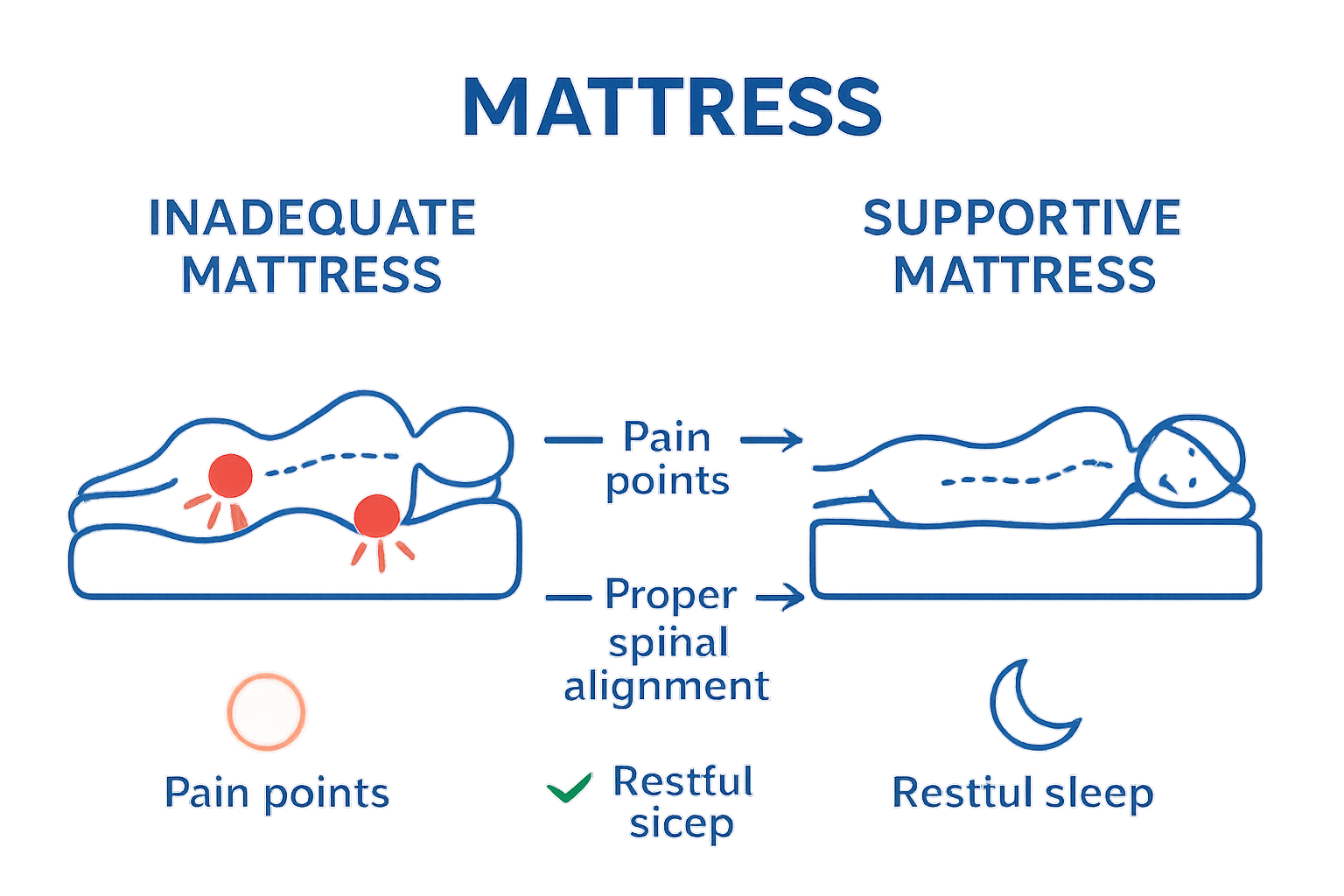
Critical Consequences of Poor Mattress Selection:
- Chronic lower back pain development
- Increased muscle tension and stiffness
- Reduced sleep quality and recovery
- Potential long-term postural complications
Understanding Spinal Alignment and Support
Proper spinal alignment during sleep is crucial for preventing and managing back issues.
A mattress that does not provide adequate support allows the spine to curve unnaturally, creating pressure points and disrupting the body’s natural healing processes during rest. This misalignment can lead to persistent discomfort and potentially accelerate degenerative conditions.
For individuals seeking comprehensive guidance on selecting the right mattress, explore our detailed guide on buying a comfortable and stylish mattress to make an informed decision that protects your back health.
How Different Mattress Types Support Your Lower Back
Choosing the right mattress type is crucial for maintaining optimal spinal health and preventing chronic lower back pain. Different mattress materials and construction techniques offer unique support mechanisms that can significantly impact your body’s alignment and comfort.
Memory Foam and Latex Mattresses
Memory foam and latex mattresses are renowned for their exceptional pressure relief and contouring capabilities. These materials adapt to body temperature and weight, creating a personalized support system that distributes body weight evenly. Research from the Durban University of Technology suggests that individual comfort plays a significant role in spinal support.
Key Benefits of Memory Foam and Latex:
- Responsive contouring to body shape
- Reduced pressure point stress
- Enhanced weight distribution
- Minimal motion transfer between sleep partners
Innerspring and Hybrid Mattress Designs
Traditional innerspring and hybrid mattresses offer a different approach to back support. These mattresses combine metal coil systems with additional comfort layers, providing a balance between firmness and cushioning.
To help you quickly understand the differences between the main mattress types for lower back support, here is a handy comparison of their core support features based on the article content.
| Mattress Type | Key Support Features | Typical Benefits for Lower Back |
|---|---|---|
| Memory Foam | Contours to body, responds to heat/weight | Excellent pressure relief, weight distribution, reduced motion transfer |
| Latex | Responsive, adapts to shape, supportive | Even spinal alignment, minimal pressure points, durable support |
| Innerspring | Coil systems, firm structure | Better air flow, targeted and zoned support, firmer feel |
| Hybrid | Combines coils with foam/latex layers | Balance of firmness and cushioning, improved lumbar support |
For individuals seeking comprehensive guidance on selecting the right mattress support system, explore our detailed mattress support systems for Gauteng homes to understand how different technologies can address your specific back support needs.
Key Features to Look for in a Bed for Back Support
Selecting a bed with optimal back support requires careful consideration of multiple complex factors. The right mattress acts as a therapeutic platform that can dramatically improve spinal health, reduce chronic pain, and enhance overall sleep quality.

Mattress Firmness and Support Zones
Mattress firmness is not a one-size-fits-all concept. Different body types and sleeping positions demand unique support configurations. A medium-firm mattress typically provides the best balance between comfort and structural support, allowing the spine to maintain its natural curvature.
Critical Support Zone Characteristics:
- Targeted lumbar region reinforcement
- Graduated support for different body weight areas
- Adaptive contouring around shoulders and hips
- Consistent pressure distribution
Material Composition and Ergonomic Design
The internal composition of a mattress significantly impacts its back support capabilities. Materials like high-density memory foam, latex, and hybrid constructions offer different levels of responsiveness and weight distribution.
The following table summarises the most important mattress features to look for when prioritising lower back support, as mentioned in the section on key features for spinal health.
| Feature | Description |
|---|---|
| Medium-Firm Support | Prevents undue sinking, balances comfort and structure |
| Responsive Material | Adapts to body shape, relieves pressure points |
| Zoned/Lumbar Support Zones | Reinforced regions for lower back & heavier body areas |
| Even Weight Distribution | Reduces stress on muscles and joints |
| Quality Construction/Materials | High-density foam, latex, hybrid builds increase durability & alignment |
| Ergonomic Design | Supports natural spinal curves and adapts to different sleepers |
Discover transformative bed options that can revolutionize your sleep experience and learn how advanced mattress engineering can provide unprecedented back support and comfort.
Real-World Impacts of Sleeping on the Right Mattress
The consequences of sleeping on an inappropriate mattress extend far beyond temporary discomfort, potentially triggering long-term health complications that can significantly diminish quality of life. Understanding these real-world implications helps individuals make more informed bedding choices.
Physical Health Transformation
Clinical research from a comprehensive medical study revealed dramatic improvements in patients’ physical conditions when transitioning to appropriately supportive mattresses. Participants experiencing chronic lower back pain demonstrated substantial reduction in pain intensity and improved mobility after switching to medium-firm mattresses.
Tangible Health Benefits of Proper Mattress Selection:
- Decreased chronic pain occurrence
- Enhanced sleep quality and duration
- Improved muscular recovery and relaxation
- Reduced risk of developing postural disorders
Psychological and Performance Implications
Beyond physical recovery, the right mattress profoundly influences psychological well-being and daily performance. Poor sleep surfaces contribute to disrupted sleep patterns, leading to increased stress, diminished cognitive function, and reduced workplace productivity. Quality sleep acts as a critical regenerative process, enabling the body to repair tissue, consolidate memories, and regulate emotional responses.
For individuals seeking deeper insights into optimizing their sleep experience, explore our memory foam mattress buying guide for Gauteng and discover how strategic mattress selection can transform your overall health and wellness.
Ready to Transform Your Back Pain Into Comfort?
Struggling with lower back pain every night can feel overwhelming, especially when you are searching for relief and better sleep. This article has highlighted how vital the right support and proper mattress choice are for spinal health, long-term well-being, and easing pain. Your next step is simple: explore premium options designed specifically for lower back care. Discover our wide range of foam mattresses proven to offer the medium-firm support and adaptive contouring recommended for spine alignment.

Why wait another night in discomfort? Take action and invest in your health with Comfy Beds. For a full list of our affordable mattress solutions, see our mattress only collection. Shop today and feel the real difference a supportive mattress makes for your lower back.
Frequently Asked Questions
What type of mattress is best for lower back support?
A medium-firm mattress is often considered the best option for lower back support, as it provides a balance between comfort and firmness, allowing for proper spinal alignment.
How does mattress firmness affect lower back pain?
Mattress firmness significantly impacts lower back pain management. Medium-firm mattresses help maintain natural spinal curvature while relieving pressure points, thereby reducing discomfort.
What materials are ideal for a supportive mattress?
Memory foam and latex mattresses are ideal for lower back support because they contour to the body’s shape, providing excellent pressure relief and weight distribution.
Can the right mattress improve sleep quality?
Yes, the right mattress can greatly enhance sleep quality by providing proper support and alignment, reducing pain, and promoting a restful night’s sleep.
