
Choosing a new bed frame can completely transform the look and feel of your bedroom, but there is much more to it than just picking out something that matches your curtains. Most people think the decision ends with colour or shape. It turns out the type of material you choose impacts not only the style but also the durability, comfort, and even the air quality in your home. Some hardwood frames can last for decades, while metal and upholstered options each bring their own unique benefits to your sleep and space. The real surprise is how much the right frame material can affect your health and sleep experience in ways you might not expect.
Table of Contents
- What Are The Different Types Of Bed Frame Materials?
- Why The Material Of Your Bed Frame Matters
- How Bed Frame Materials Influence Comfort And Durability
- Exploring Aesthetic And Practical Considerations In Material Choice
Quick Summary
| Takeaway | Explanation |
|---|---|
| Consider bed frame material impact | The material influences durability, comfort, and appearance, affecting sleep quality and aesthetic appeal. |
| Wood frames offer timeless versatility | Wooden frames provide natural durability, aesthetic flexibility, and the option for custom designs to match various styles. |
| Metal frames are durable and low-maintenance | Metal bed frames are lightweight, resistant to wear, and require minimal upkeep, ideal for modern aesthetics. |
| Upholstered frames enhance comfort and style | Upholstered frames combine padding and fabric for a luxurious feel, improving sensory experience while adding elegance. |
| Evaluate health and environmental impact | Choose materials that reduce allergens and emissions, considering sustainability in your decision-making process. |
What Are the Different Types of Bed Frame Materials?
Bed frame materials significantly impact the durability, aesthetic appeal, and overall comfort of your sleeping environment. Understanding different bed frame options helps you make an informed decision that matches your personal style and functional requirements.
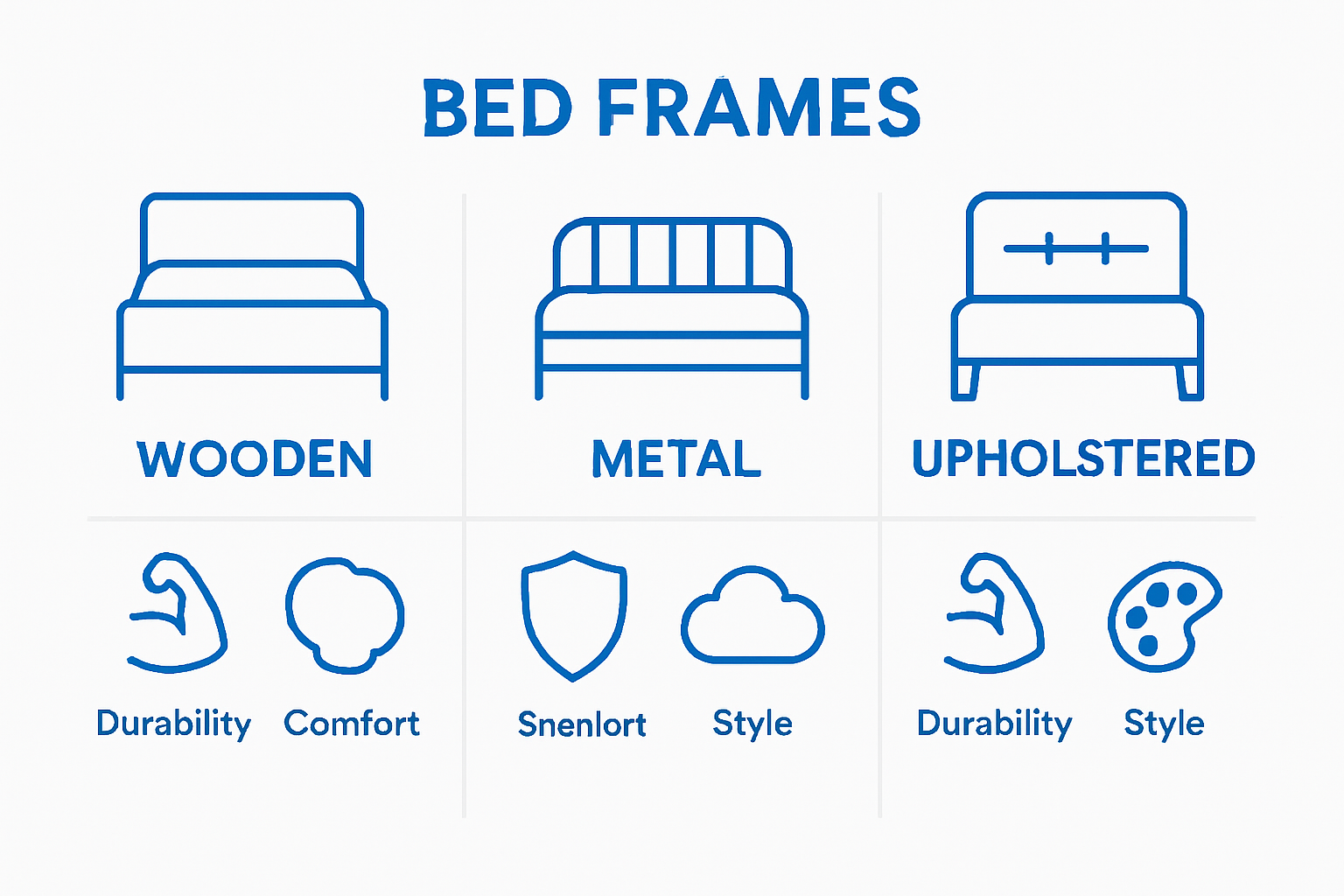
Wood Frames: Classic and Versatile
Wooden bed frames represent a timeless choice in bedroom furniture. According to Interior Design EDU, wooden frames are typically constructed from hardwoods like oak, maple, or pine, offering remarkable strength and aesthetic flexibility. These materials provide several distinct advantages:
- Excellent natural durability
- Wide range of finish options
- Ability to match various interior design styles
- Potential for custom crafting and modifications
Hardwoods like oak deliver superior structural integrity, while softer woods such as pine offer more affordable alternatives. The grain patterns and natural warmth of wood make these frames particularly appealing for traditional and contemporary bedroom settings.
Metal Frames: Modern and Practical
Metal bed frames represent a contemporary solution for those seeking sleek design and robust construction. Materials like steel, aluminum, and iron provide unique benefits that cater to different aesthetic preferences and functional needs. These frames are known for their:
- Lightweight construction
- Resistance to wear and tear
- Minimal maintenance requirements
- Potential for intricate design elements
Steel frames offer maximum strength, while aluminum provides a lighter alternative that resists corrosion. Wrought iron frames combine durability with ornate design possibilities, making them suitable for various interior design approaches.
Upholstered Frames: Comfort Meets Style
Upholstered bed frames represent a luxurious option that blends comfort with sophisticated design. Covered in carefully selected fabrics and often including foam padding, these frames transform a basic sleeping surface into a statement piece of furniture. The padding and fabric covering provide additional benefits like sound absorption and increased comfort, making them an excellent choice for those prioritizing both aesthetics and sensory experience.
Choosing the right bed frame material involves considering factors like room design, personal comfort preferences, budget, and long-term durability.
Here is a comparison of the main bed frame material types, highlighting their features, maintenance needs, aesthetic qualities, and health/environmental considerations to help you make an informed choice:
| Material Type | Key Features | Maintenance Level | Aesthetic Appeal | Health & Environmental Aspects |
|---|---|---|---|---|
| Wood (Hardwood/Softwood) | Natural durability, customisable, warm textures | Moderate | Timeless, fits many styles | Low VOC if untreated, can be eco-friendly |
| Metal (Steel, Aluminium, Iron) | Lightweight, strong, resistant to wear | Low | Modern, can be ornate or minimalist | Usually hypoallergenic, recyclable |
| Upholstered | Padded comfort, sound absorption, luxury | Moderate to High | Elegant, soft textures, customisable | Reduces allergens if hypoallergenic, may emit VOCs if synthetic |
| Each material type offers unique characteristics that can significantly enhance your sleeping environment. |
Why the Material of Your Bed Frame Matters
The material of your bed frame is far more than a mere aesthetic choice. Exploring bed frame characteristics reveals how this foundational element significantly impacts your sleep quality, health, and overall bedroom experience.
Structural Integrity and Durability
Your bed frame serves as the critical support system for your mattress and body weight. Different materials offer varying levels of structural performance and longevity. According to research published in the National Institutes of Health library, the building materials used in furniture can have profound implications beyond simple visual appeal.
The right material determines how well your bed frame will:
- Distribute body weight evenly
- Resist warping and structural degradation
- Maintain stability over extended periods
- Support multiple sleep positions
Wooden frames, for instance, provide natural flexibility and strength, while metal frames offer rigid support with minimal maintenance requirements. The choice directly influences the long-term comfort and reliability of your sleeping environment.
Health and Indoor Environment Considerations
Bed frame materials play a crucial role in maintaining a healthy indoor environment. Certain materials can impact air quality, allergen accumulation, and potential chemical emissions. Upholstered frames with hypoallergenic fabrics can reduce dust mite collection, while solid wood frames with natural finishes minimize volatile organic compound (VOC) release.
Key health considerations include:
- Potential for allergen collection
- Chemical emission levels
- Ease of cleaning and maintenance
- Resistance to moisture and mold growth
Economic and Aesthetic Value
Beyond functional considerations, bed frame materials represent a significant investment in your personal space. The right material balances initial cost, long-term durability, and aesthetic appeal. Metal frames might offer lower initial costs, while hardwood frames could provide generational value with proper maintenance.
Consider how the material complements your bedroom design, matches your lifestyle needs, and represents a sustainable long-term investment in your personal comfort and well-being.
How Bed Frame Materials Influence Comfort and Durability
Bed frame materials are not merely decorative elements but critical components that directly impact your sleeping experience. Exploring frame design nuances reveals the intricate relationship between material selection and overall sleep quality.
Weight Distribution and Support Mechanics
The fundamental role of a bed frame is to provide stable, uniform support for your mattress and body weight. According to research published in the Journal of Sleep Research, the material’s inherent properties significantly influence weight distribution and structural performance.
Key support characteristics include:
- Ability to absorb and redistribute body weight
- Resistance to sagging and deformation
- Maintaining consistent mattress alignment
- Minimizing motion transfer between sleep partners
Wooden frames, with their natural flexibility, excel at gradual weight absorption, while metal frames offer more rigid, concentrated support. This variation means different materials suit different body types and sleeping preferences.
Thermal Regulation and Comfort Dynamics
Bed frame materials play a surprising role in temperature management and overall sleeping comfort. Different materials interact with body heat and ambient room conditions in unique ways, affecting your sleep environment’s thermal balance.
Thermal interaction considerations include:
- Heat retention properties
- Airflow and ventilation potential
- Material’s thermal conductivity
- Interaction with mattress materials
Upholstered frames with breathable fabrics can provide insulation without excessive heat trapping, while metal and wooden frames offer distinct thermal experiences that impact sleep quality.
Longevity and Maintenance Requirements
The durability of a bed frame directly correlates with its material composition. Each material presents unique longevity characteristics and maintenance demands that influence long-term value and performance.
Factors affecting frame durability include:
- Resistance to environmental humidity
- Potential for structural degradation
- Ease of repair and restoration
- Cost-effectiveness over time
While metal frames might offer corrosion resistance, wooden frames provide opportunities for refinishing and repair. Upholstered frames require more meticulous maintenance but can offer aesthetic versatility and comfort. Understanding these nuances helps you make an informed investment in your sleeping infrastructure.
This table summarises how different bed frame materials influence comfort, support, and maintenance over time to clarify their impacts on your sleep quality and lifestyle:
| Material Type | Support Performance | Thermal Properties | Longevity & Durability | Maintenance Needs |
|---|---|---|---|---|
| Wood | Flexible, evenly distributes weight | Naturally insulating | Can last decades if cared for | Needs occasional refinishing or repair |
| Metal | Rigid, stable, reduces sagging | Tends to stay cool | Highly durable, resists pests | Wipe-down, check for rust |
| Upholstered | Adds plush, reduces motion transfer | Variable (based on fabrics) | Moderate; fabric wears over time | Vacuuming/upholstery cleaning needed |

Exploring Aesthetic and Practical Considerations in Material Choice
Selecting the right bed frame material involves a complex balance between visual appeal and functional performance. Discovering design strategies helps you navigate the nuanced world of material selection for your bedroom environment.
Visual Harmony and Design Integration
Your bed frame acts as a centerpiece in bedroom design, requiring careful consideration of aesthetic compatibility. According to The Wood Database, material characteristics significantly influence a room’s visual narrative and emotional atmosphere.
Design integration factors include:
- Color and texture compatibility
- Alignment with existing furniture styles
- Room size and spatial proportions
- Personal design preferences
Wooden frames offer warm, natural tones that complement traditional and contemporary spaces, while metal frames provide sleek, minimalist options for modern interiors. Upholstered frames introduce textural depth and softness, allowing for more personalized design expressions.
Lifestyle and Functional Adaptability
Beyond visual considerations, bed frame materials must align with your specific lifestyle and practical requirements. Each material presents unique advantages that cater to different living situations and personal needs.
Lifestyle compatibility considerations include:
- Maintenance complexity
- Durability under specific conditions
- Adaptability to changing interior designs
- Budget constraints and long-term value
Families with young children might prefer more robust materials like hardwood or metal, which can withstand increased wear. Individuals seeking minimal maintenance might gravitate towards aluminum or powder-coated metal frames that resist corrosion and require limited upkeep.
Environmental and Sustainability Factors
Modern material selection increasingly involves environmental consciousness and sustainability considerations. The choice of bed frame material reflects not just personal preference but also ecological responsibility.
Sustainability factors to evaluate include:
- Renewable resource utilization
- Manufacturing carbon footprint
- Potential for recycling or repurposing
- Long-term environmental impact
Reclaimed wood frames offer an eco-friendly alternative, while certain metal frames made from recycled materials provide sustainable options. Understanding these nuanced considerations empowers you to make informed decisions that balance aesthetic desires with environmental stewardship.
Find Your Ideal Bed Frame Material with Comfy Beds
Are you struggling to choose between wood, metal, or upholstered bed frames for your home? We understand how important the right material is for comfort, durability, and a healthy bedroom environment. At Comfy Beds, we do more than give you advice—we make it easy to put your knowledge into action. With exclusive access to top-quality beds and furniture at factory-low prices, you can find frames in every popular material discussed in this guide. See our headboard collections or need a smart solution? Explore storage bases that combine style with practical support.
Ready to turn what you have learned into a better night’s rest? Shop at Comfy Beds now and secure deals on beds and bedroom furniture crafted from materials that enhance your sleep and your space. Start today and experience the lasting difference of a smart material choice.
Frequently Asked Questions
What are the advantages of wooden bed frames?
Wooden bed frames are known for their excellent durability, a wide range of finish options, and ability to match various interior design styles. They provide natural strength and can be custom crafted for unique designs.
How do metal bed frames compare to wooden frames in terms of maintenance?
Metal bed frames typically require minimal maintenance compared to wooden frames. They are resistant to wear and tear as well as corrosion, making them a practical choice for low-maintenance living.
What are the benefits of upholstered bed frames?
Upholstered bed frames offer a luxurious feel with added comfort from foam padding and soft fabrics. They enhance the aesthetic appeal of a bedroom and can also provide sound absorption, making them suitable for a peaceful sleep environment.
How does the material of a bed frame impact sleep quality?
The material of a bed frame affects weight distribution, structural stability, and thermal regulation, all of which can influence overall sleep quality. Different materials support different comfort levels and sleeping preferences.
