
Choosing the right mattress matters more than most people think. In Gauteng, summer temperatures can soar above 30°C, and the wrong mattress can trap heat, ruining your nights. But the real shock is this. Studies show that memory foam mattresses can last up to seven years longer than traditional spring mattresses, even in demanding climates. So the answer is not just about comfort. It’s about making a smart investment that impacts your sleep and your wallet for years to come.
Table of Contents
- Spring Vs Foam Mattress: Key Differences
- Comfort And Support: Gauteng Customer Tips
- Cost, Maintenance, And Local Availability
Quick Summary
| Takeaway | Explanation |
|---|---|
| Structural Differences Matter | Spring mattresses offer a bouncy surface with improved airflow, while foam mattresses contour to body shapes, providing targeted support, particularly for joint pain. |
| Adapt to Local Climate | Gauteng’s warm summers make spring mattresses advantageous for airflow, but modern foam options with cooling technologies can also be effective for temperature regulation. |
| Consider Long-Term Value | Foam mattresses generally have a higher upfront cost but offer better durability and value over time compared to spring mattresses, which may need replacement sooner. |
| Maintenance Requirements Vary | Spring mattresses need regular rotation, while foam mattresses require gentle care to prevent degradation and moisture buildup. |
| Testing Before Purchase is Key | Explore local bedding stores for hands-on testing of both mattress types, allowing you to compare comfort and fit according to personal needs. |
Spring vs Foam Mattress: Key Differences
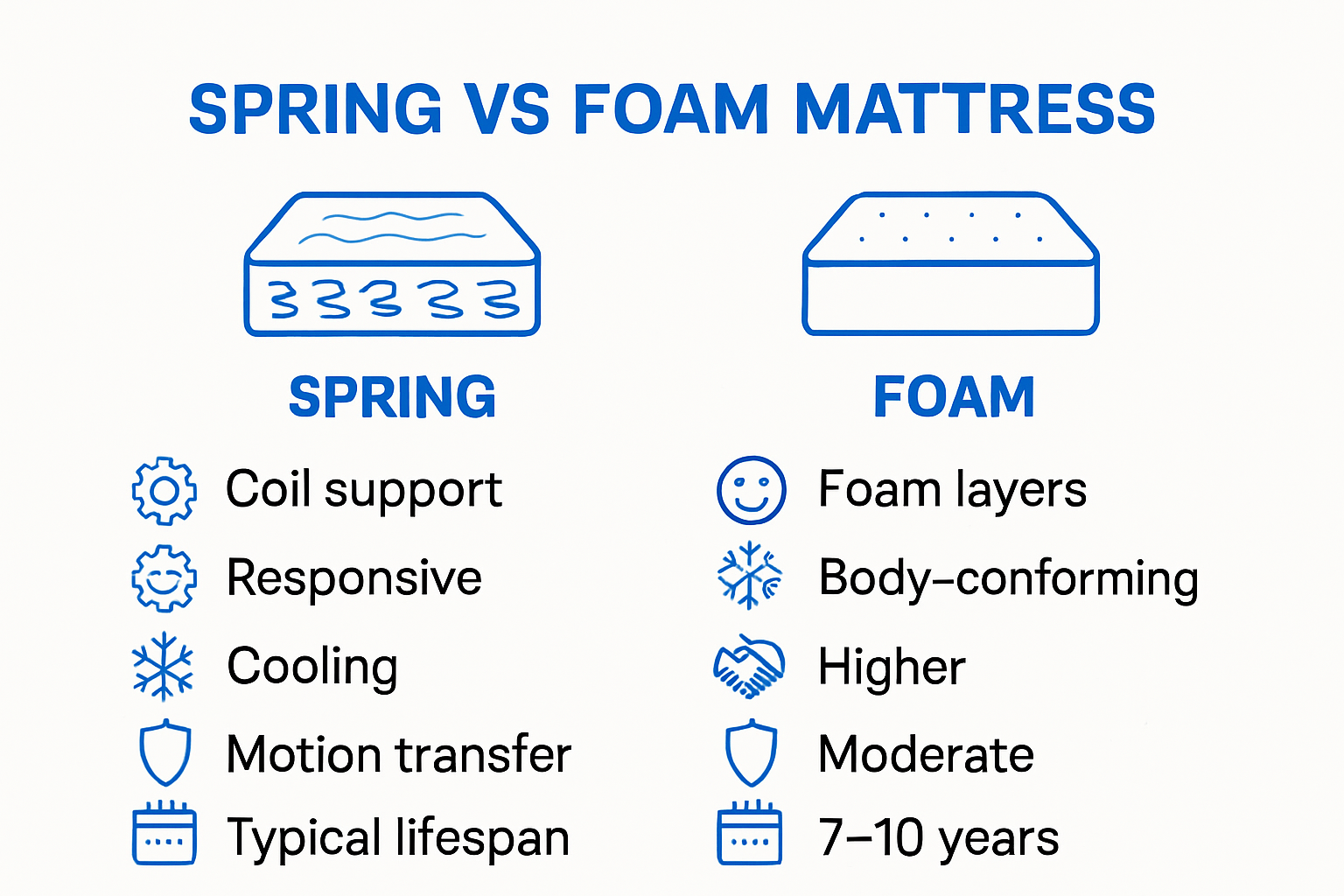
Choosing between spring and foam mattresses involves understanding their fundamental characteristics and how they impact sleep quality. Each mattress type offers unique benefits that cater to different sleep preferences and physical needs.
Structural Composition and Support
Spring mattresses utilise a traditional design featuring interconnected metal coils that provide foundational support. These coils create a bouncy surface that distributes body weight across the mattress. According to Sleep Foundation, innerspring mattresses typically have multiple layers of coils with varying gauges and designs that influence overall firmness and responsiveness.
Foam mattresses, in contrast, are constructed from viscoelastic or polyurethane materials that conform precisely to body contours. National Sleep Foundation notes that memory foam mattresses adapt to individual body shapes, creating a unique pressure-relief experience that traditional spring mattresses cannot replicate. This adaptive quality makes foam mattresses particularly beneficial for individuals with joint pain or those requiring targeted support.
Temperature Regulation and Comfort
Temperature management represents a critical difference between spring and foam mattresses. Spring mattresses inherently provide better airflow due to the open spaces between coils, which allows heat to dissipate more effectively. This characteristic makes them an excellent choice for people who tend to sleep hot or live in warmer climates.
Foam mattresses, especially traditional memory foam, have historically struggled with heat retention. However, modern foam technologies have introduced cooling gel infusions and advanced materials that mitigate this issue. Newer foam mattresses now incorporate innovative cooling technologies that help regulate body temperature more efficiently.
Motion Transfer and Durability
Motion transfer is another crucial consideration when comparing these mattress types. Foam mattresses excel in minimising movement across the bed, making them ideal for couples or light sleepers. When one partner moves or changes position, the foam absorbs and isolates that motion, preventing disturbance to the other person.
Spring mattresses, particularly those with interconnected coil systems, tend to transfer more motion across the surface. This characteristic can result in more noticeable movement when a partner shifts or gets in and out of bed. For light sleepers or those sharing a bed, a foam mattress might provide a more uninterrupted sleep experience.
Ultimately, the choice between spring and foam mattresses depends on individual sleep preferences, body type, and specific comfort requirements. Both mattress types offer distinct advantages, and understanding these differences can help you make an informed decision that supports your best night’s sleep.
To make it easy to compare the key characteristics of spring and foam mattresses discussed above, here’s a side-by-side comparison table:
| Feature | Spring Mattress | Foam Mattress |
|---|---|---|
| Support | Uses interconnected metal coils for support and bounce | Conforms to body contours for targeted pressure relief |
| Airflow & Temperature | Excellent airflow; cooler in hot conditions | May retain heat (older models); modern versions use cooling tech |
| Motion Transfer | Higher motion transfer, more disturbance from movement | Excellent motion isolation, less partner disturbance |
| Durability/Lifespan | Typically shorter; may need replacement sooner | Can outlast springs by up to 7 years; retains structure longer |
| Maintenance | Needs regular rotation to prevent sagging, more dust build-up risk | Requires gentle cleaning; avoid moisture and direct sun |
| Initial Cost | Usually lower upfront price | Generally higher purchase price, but may offer better long-term value |
| Who It Suits Best | Back & stomach sleepers, those needing firmer support, hot sleepers | Side sleepers, those with joint pain, people wanting motion isolation |
Comfort and Support: Gauteng Customer Tips
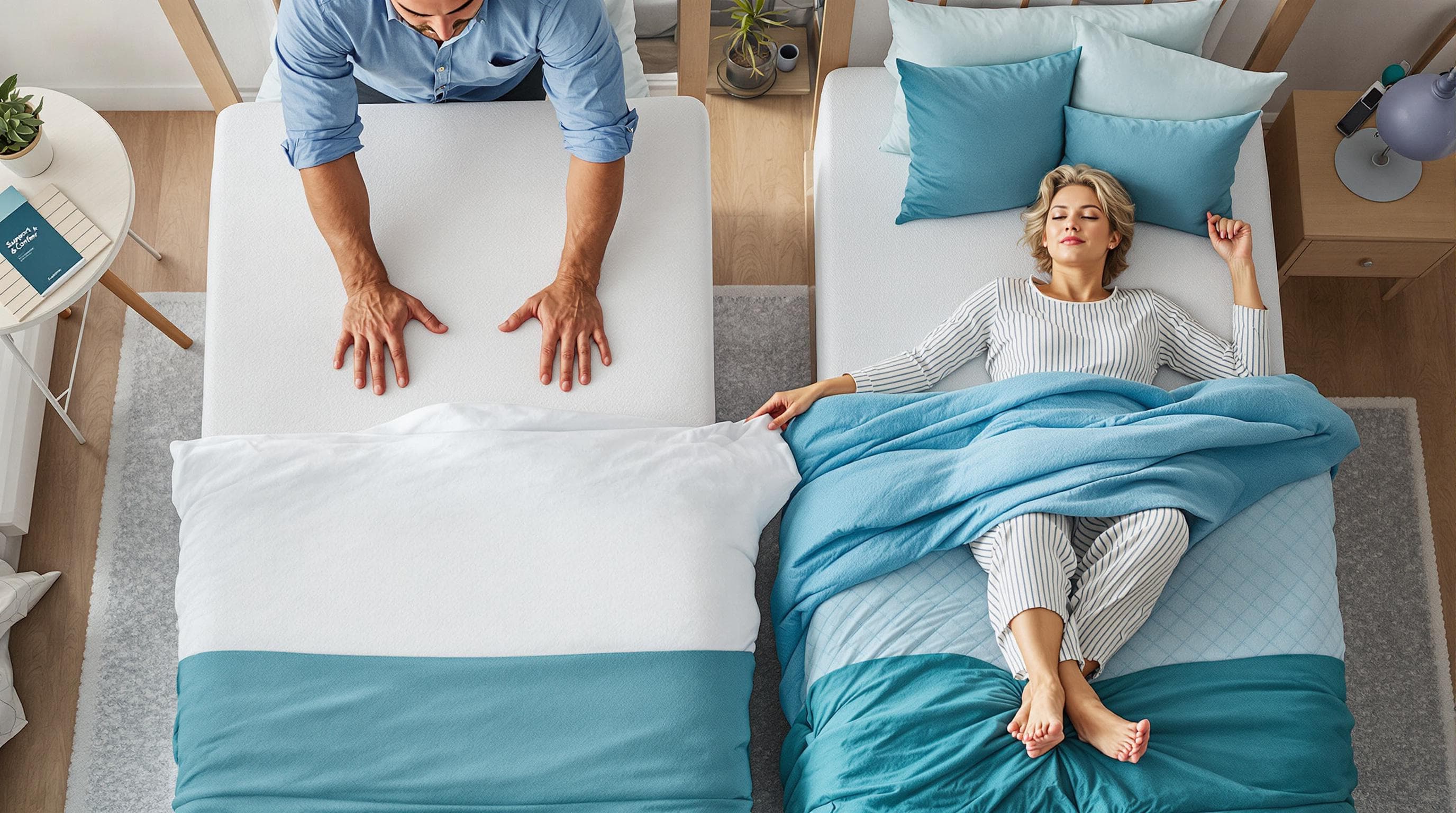
Selecting the right mattress involves more than just understanding structural differences. For Gauteng residents, personal comfort and regional considerations play crucial roles in making an informed mattress selection.
Assessing Individual Sleep Needs
Understanding your unique sleep profile is crucial for selecting between spring and foam mattresses. According to Sleep Health Foundation, individual factors like body weight, sleeping position, and existing health conditions significantly influence mattress comfort.
For side sleepers, foam mattresses often provide superior pressure relief by contouring to body curves. Orthopaedic Research Institute suggests that memory foam can reduce joint pressure points, making it ideal for individuals experiencing back or hip discomfort. Conversely, back and stomach sleepers might prefer spring mattresses, which offer firmer support and prevent excessive sinking.
Regional Climate Considerations
Gauteng’s variable climate demands careful mattress selection. The region experiences warm summers and mild winters, which directly impacts mattress comfort and temperature regulation. Spring mattresses with improved airflow can be beneficial during hotter months, offering natural cooling through enhanced ventilation.
Foam mattresses have evolved to address issues related to heat retention. Modern variants incorporate cooling gel technologies and breathable materials designed explicitly. The Sleep Technology Institute recommends looking for mattresses with advanced cooling properties to ensure a ttresses with advanced cooling properties to ensure comfortable sleep throughout the year.
Budget and Longevity Factors
Budget considerations are paramount for consumers in Gauteng. While initial costs vary, long-term value and durability should be the guiding factors in your decision. Spring mattresses typically have lower upfront costs but might require replacement sooner. High-quality foam mattresses, though initially more expensive, often provide longer-lasting support and maintain structural integrity.
Research indicates that consumer satisfaction rates depend on understanding these nuanced differences. When selecting a mattress, consider warranty periods, material quality, and potential long-term health benefits.
Ultimately, the perfect mattress is a personal choice that strikes a balance between comfort, support, and individual needs. By carefully evaluating your specific requirements and understanding the strengths of different mattress types, residents of Gauteng can make an informed decision that promotes restful, rejuvenating sleep.
To help Gauteng residents match their sleep preferences and body types to the best mattress type, here’s a quick reference guide:
| Sleep Factor | Best Mattress Type | Rationale |
|---|---|---|
| Side sleepers | Foam mattress | Superior pressure relief, contours to body shape |
| Back/stomach sleepers | Spring mattress | Firmer support, prevents excessive sinking |
| Joint/back pain | Foam mattress | Provides targeted support, reduces pressure points |
| Hot sleepers | Spring mattress* | Enhanced airflow; modern foam mattresses with cooling gel also suitable |
| Couples/light sleepers | Foam mattress | Excellent motion isolation, less disturbance |
| Budget-conscious | Spring mattress | Lower upfront cost |
| Looking for longevity | Foam mattress | Can outlast springs by up to 7 years |
*Modern foam mattresses with cooling technologies may also suit hot sleepers.
Cost, Maintenance, and Local Availability
Navigating the mattress market in Gauteng requires understanding the financial and practical considerations that extend beyond the initial purchase. Cost, maintenance requirements, and local availability play crucial roles in making an informed decision between spring and foam mattresses.
Price Range and Value Considerations
Mattress pricing varies significantly between spring and foam options. According to Consumer Reports South Africa, spring mattresses typically range from R3,000 to R12,000, offering more budget-friendly options for cost-conscious consumers.
The long-term value extends beyond initial pricing. Economic Research Group indicates that foam mattresses often provide longer lifespan and better durability, potentially offsetting their higher upfront costs. This makes them an attractive investment for consumers seeking long-term comfort and performance.
Maintenance and Care Requirements
Maintenance differences between spring and foam mattresses can significantly impact overall ownership experience. Spring mattresses require regular rotation every three to six months to ensure even wear and prevent sagging. The interconnected coil systems are more susceptible to dust accumulation and potential spring deterioration.
Foam mattresses demand more specialised care. The Handyman Johannesburg recommends specific cleaning techniques that minimise moisture exposure and prevent material degradation. These mattresses typically need gentle surface cleaning and protection from direct sunlight and excessive humidity.
Below is an at-a-glance table comparing cost ranges and basic maintenance needs for both mattress types in Gauteng:
| Mattress Type | Typical Price Range | Maintenance Needs | Lifespan Potential |
|---|---|---|---|
| Spring | R2,000 – R12,000 | Rotate every 3-6 months; clean surface | Shorter; may sag sooner |
| Foam | R4,000 – R25,000 | Gentle cleaning; avoid sun/moisture | Can last up to 7 years longer |
Local Availability and Purchasing Options
Gauteng offers a diverse range of mattress purchasing channels, from specialised bedding stores to online platforms. Local retailers are increasingly stocking both spring and foam mattress options, providing consumers with a comprehensive selection of choices. Physical stores allow for direct testing and comparison, while online platforms offer convenience and potentially a broader range of products.
Regional availability has expanded with increased consumer demand for specialised sleep solutions. Manufacturers and retailers in Gauteng now offer more customised options, including hybrid mattresses that combine spring and foam technologies to cater to varied sleep preferences.
Understanding these factors helps Gauteng residents make informed decisions about mattress investments. Whether prioritising initial cost, long-term durability, or specific maintenance requirements, carefully evaluating these aspects ensures selecting a mattress that provides optimal comfort, support, and value tailored to individual sleep needs.
Frequently Asked Questions
What is the main difference between spring and foam mattresses?
Spring mattresses utilise interconnected coils for support and feature improved airflow, while foam mattresses conform to the body for targeted pressure relief and support.
Which mattress is better for hot climates like Gauteng?
Spring mattresses typically offer better airflow and remain cooler, but modern foam mattresses with cooling technologies can also be effective in managing temperature.
How long do foam mattresses last compared to spring mattresses?
Foam mattresses can outlast traditional spring mattresses by up to seven years due to their superior durability, making them a more reliable long-term investment.
What should I consider when choosing a mattress in Gauteng?
Consider your sleep position, individual comfort needs, the regional climate, and your budget when selecting between spring and foam mattresses.
Ready for Better Sleep in Gauteng? Explore the Right Mattress for Your Needs
If the struggle with restless nights and overheating has you debating between spring and foam mattresses, you are not alone. This article highlighted how Gauteng’s unique climate and your personal support needs can make finding the perfect mattress a challenge. Imagine finally waking up refreshed each day – Comfy Beds has the solutions you need. Explore our extensive range of mattresses, designed to provide outstanding pressure relief, superior comfort, and innovative cooling, tailored explicitly for South Africans who demand value and durability.
Why put off better sleep any longer? Shop directly with Comfy Beds to get top-quality beds and premium mattresses at factory-low prices, delivered straight to your door. Discover more options designed for local comfort by visiting our leading: site here or browsing our Hi-Tech Foam Mattresses for next-level cooling and support. Your restful nights start with the right choice today.
Recommended
- Beds That Transform Your Sleep: Ultimate Comfort Awaits
- Foam Mattresses Archives – Comfy Beds
- Buying A New Mattress Comfortable and Stylish
- Restful Sound Asleep Technology At Comfy Beds
- Common Roofing Materials in Cape Town: 2025 Guide for Every Building
- Top Sofa Cleaning Recommendations for Yarra Valley Residents 2025 – Yarra Valley Carpet Cleaning
