
Layering bedding sounds simple, but in Gauteng it changes everything about the way you sleep. Gauteng’s weather can jump between cold nights and sudden hot spells, and most people just toss on a single blanket or the thickest duvet they can find. Yet, research shows that using natural fabrics like cotton and bamboo can improve temperature regulation and sleep quality even in unpredictable climates. The real comfort comes from clever layering, not piling on heavier covers.
Table of Contents
- Choosing The Right Bedding Materials
- Step-By-Step Guide To Layering Bedding
- Styling Tips For A Gauteng Home
- Caring For Layered Bedding In South Africa
Quick Summary
| Takeaway | Explanation |
|---|---|
| Choose Natural Fabrics for Comfort | Opt for cotton and bamboo to regulate temperature and moisture, enhancing sleep quality. |
| Layer for Temperature Control | Utilize multiple lightweight layers rather than one heavy blanket for flexibility in Gauteng’s fluctuating temperatures. |
| Focus on Color and Texture | Select a cohesive color palette and varied textures to create a visually appealing and inviting bedroom atmosphere. |
| Maintain Bedding Regularly | Wash sheets weekly and duvet covers bi-weekly to ensure hygiene, especially in Gauteng’s dust-prone environment. |
| Understand Material Care | Different materials require specific care techniques, ensuring longevity and freshness in your bedding investment. |
Choosing the Right Bedding Materials
Selecting the perfect bedding materials is crucial for creating a comfortable sleep environment in Gauteng. The right fabrics can transform your sleeping experience, balancing comfort, temperature regulation, and durability. Understanding the unique characteristics of different bedding materials will help you make informed choices that suit your specific needs.
Natural Fabrics vs Synthetic Options
Natural fabrics offer exceptional benefits for bedding in Gauteng’s variable climate. Our guide to comfortable bedding highlights the importance of choosing materials that adapt to temperature changes. According to research in the International Journal of Environmental Research and Public Health, cotton and bamboo stand out as top choices for their remarkable thermoregulatory properties. These materials excel at moisture absorption and heat dissipation, making them ideal for regions with fluctuating temperatures.
Cotton remains a popular choice due to its breathability and softness. It allows air circulation, preventing overheating during warmer nights while providing enough warmth during cooler evenings. Bamboo fabrics take comfort a step further, offering natural antibacterial properties and exceptional moisture-wicking capabilities. These materials are particularly beneficial for those with sensitive skin or allergies.
Synthetic materials like microfiber and polyester blends provide alternative options. They often come at a lower price point and offer increased durability. However, they may not breathe as effectively as natural fabrics, potentially causing discomfort during Gauteng’s warm summers.
Considering Climate and Comfort
Gauteng’s unique climate demands bedding materials that can adapt to temperature variations. Layering becomes key to managing comfort throughout the year. Look for materials that offer:
- Breathability: Allows air circulation and prevents moisture buildup
- Temperature regulation: Keeps you cool in summer and warm in winter
- Durability: Withstands frequent washing and maintains quality over time
Wool deserves special mention for its extraordinary temperature-regulating properties. Despite being a warmer fabric, wool can actually help cool you down in hot weather while providing insulation during cooler nights. This makes it an excellent choice for Gauteng residents seeking versatile bedding materials.
Consider your personal preferences and specific needs when selecting bedding materials. Some individuals may prioritize softness, while others focus on durability or hypoallergenic properties. Thread count matters, but it’s not the only factor. A high-quality 300-thread count cotton can feel more comfortable than a lower-quality 800-thread count synthetic blend.
Texture and feel are equally important. Run your hands over potential bedding materials. Pay attention to how they feel against your skin. Smooth, soft fabrics contribute significantly to sleep quality. Remember that the right bedding material is an investment in your comfort and well-being.
Ultimately, the best bedding material is one that meets your individual needs, provides comfort, and helps you achieve a restful night’s sleep in Gauteng’s diverse climate.
Choosing the best bedding material can be easier when you can compare their features side by side. The table below summarises the key differences between the main bedding material options discussed in this guide.
| Material | Pros | Cons |
|---|---|---|
| Cotton | Breathable, soft, good for all climates | Requires frequent washing |
| Bamboo | Moisture-wicking, antibacterial, hypoallergenic | Delicate, may require gentler washing |
| Wool | Excellent temperature regulation, insulating | Not machine washable, may require dry cleaning |
| Microfiber | Affordable, durable, easy to care for | Less breathable, can cause overheating in summer |
| Polyester Blend | Inexpensive, strong, wrinkle-resistant | Limited breathability, can trap heat and moisture |
Step-by-Step Guide to Layering Bedding
Layering bedding is an art that transforms your sleeping space from ordinary to extraordinary. In Gauteng, where temperatures can fluctuate dramatically, mastering the perfect bed layering technique becomes essential for year-round comfort. Explore our winter bedding strategies to understand how strategic layering can enhance your sleep experience.
Foundation and Base Layers
The foundation of exceptional bedding starts with selecting the right base layers. According to Sleep Foundation, creating a comfortable bed involves precise layering techniques. Begin with a high-quality mattress protector to safeguard your investment and provide an initial barrier against moisture and allergens.
Next, add a fitted sheet that hugs your mattress perfectly. Choose materials that complement the mattress surface smooth cotton or soft microfiber work exceptionally well. Ensure the fitted sheet is taut and wrinkle-free, creating a crisp base for subsequent layers. The fitted sheet should match your mattress size precisely to prevent bunching or slipping during the night.
Building Warmth and Comfort
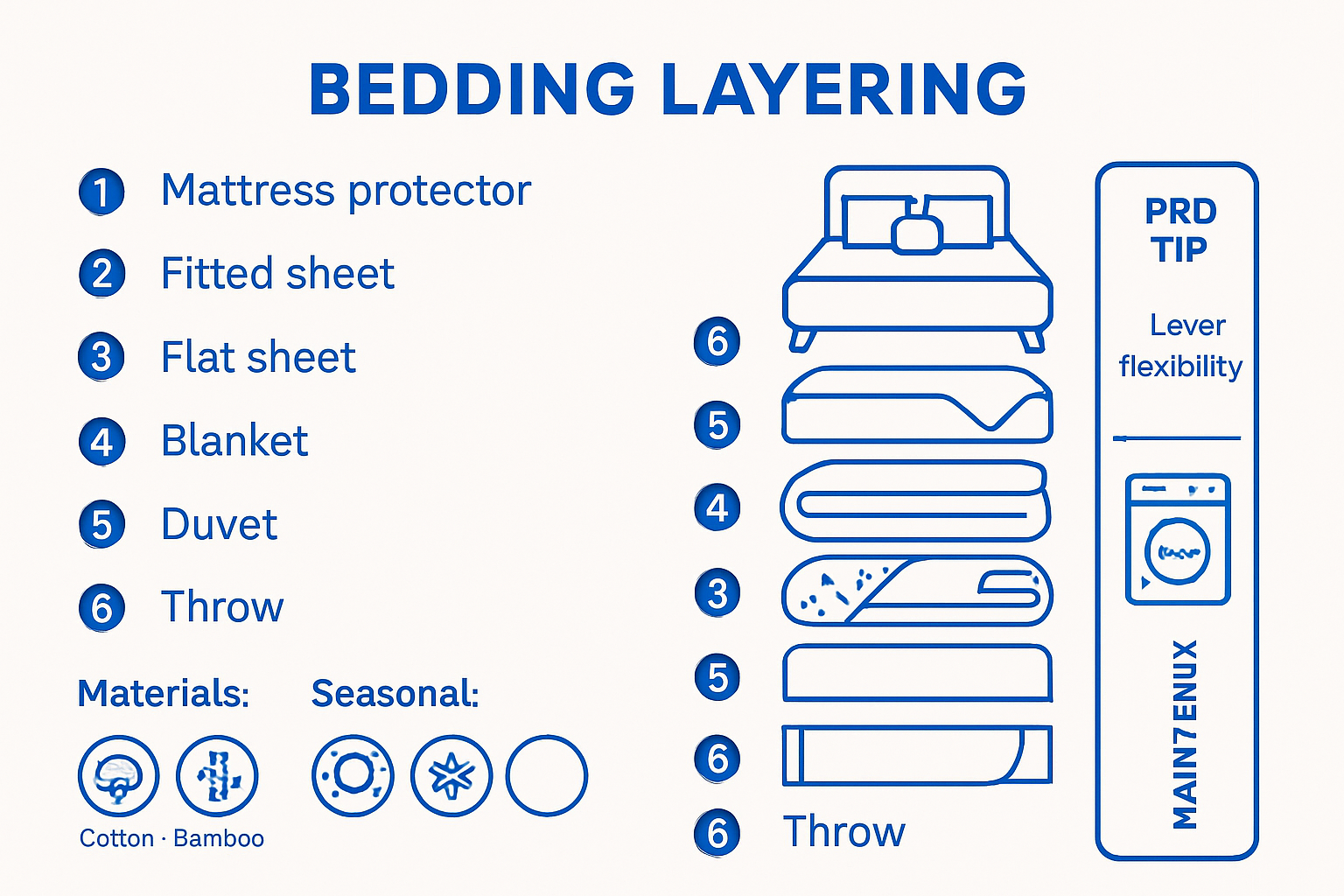
After establishing the base, focus on creating a temperature-responsive bedding system. As Good Housekeeping recommends, start with a flat sheet as your next layer. This provides an additional buffer between your body and heavier blankets, allowing for easier temperature regulation.
Consider using multiple lightweight layers instead of one heavy blanket. This approach allows you to adjust your bedding easily as Gauteng’s temperatures shift throughout the night. A lightweight blanket followed by a duvet or comforter provides flexibility. For colder winter nights, add an extra throw blanket at the foot of the bed that can be easily pulled up when temperatures drop.
Finishing Touches and Styling
Pillows and decorative elements complete your bedding layering strategy. According to Furniture.com, strategic pillow arrangement can elevate both comfort and aesthetic appeal. Start with your sleeping pillows, arranging them neatly against the headboard. Add decorative throw pillows in front, mixing textures and colors that complement your bedroom decor.
Pay attention to color coordination and texture variation. Mix smooth surfaces with textured fabrics to create visual interest. A combination of solid colors and subtle patterns can transform your bed from a simple sleeping area to a design statement.
Remember that bedding layering is personal. Experiment with different combinations to find what works best for your comfort and style. Some people prefer minimal layers, while others enjoy a more plush, luxurious approach. The key is creating a sleep environment that feels comfortable and inviting.
In Gauteng’s variable climate, the ability to add or remove layers quickly becomes crucial. Keep additional blankets or throws easily accessible, allowing you to adjust your bedding configuration as temperatures change throughout the night and across seasons.
To help visualise the layering process, here is a simple step-by-step table outlining each layer for making a comfortable bed in Gauteng’s changing climate.
| Step | Layer | Purpose |
|---|---|---|
| 1 | Mattress Protector | Shields mattress, keeps allergens/moisture at bay |
| 2 | Fitted Sheet | Provides soft, smooth base for sleeping |
| 3 | Flat Sheet | Adds comfort, easy removal for temperature adjustment |
| 4 | Lightweight Blanket | Flexible warmth, can remove/add as needed |
| 5 | Duvet/Comforter | Primary warmth source, for cold nights |
| 6 | Throw Blanket | Extra warmth for feet or cold spells |
| 7 | Pillows/Decorative Cushions | Sleep support & style enhancement |
Styling Tips for a Gauteng Home
Styling your bedroom with the right bedding approach transforms a simple sleeping space into a personal sanctuary that reflects both comfort and design sensibilities. In Gauteng, where interior design meets practical climate considerations, creating a visually appealing and functional bedroom becomes an art form. Learn about smart bedroom storage solutions to maximize both style and functionality.
Color Palette and Texture Selection
Choosing the right color palette is fundamental to creating a cohesive bedroom aesthetic. According to HGTV, successful bedding styling begins with understanding color harmony and texture interplay. For Gauteng homes, consider neutral base colors like soft greys, warm whites, or muted earth tones that reflect the region’s natural landscape.
Texture plays a crucial role in adding depth and visual interest. Mix different fabric weights and surfaces to create a rich, inviting atmosphere. Combine smooth cotton sheets with a chunky knit throw, or pair a crisp linen duvet with velvet decorative pillows. These textural contrasts not only enhance visual appeal but also provide tactile variety that makes your bedroom feel more dynamic.
Strategic Layering and Accessorizing
Layering goes beyond mere functionality it is a design statement. As Crate & Barrel recommends, start with a cohesive color palette and build complexity through strategic accessorizing. Use throw pillows in complementary or contrasting colors to add personality. An odd number of pillows typically creates a more balanced and aesthetically pleasing arrangement.
Consider the seasonal versatility of your bedding. Gauteng’s climate demands flexibility lightweight, breathable layers for summer and warmer, more substantial options for winter. Invest in a neutral base set that can be easily transformed with seasonal accessories like throws, runners, and decorative cushions.
Creating Visual Balance
Balance is key in bedroom styling. Wayfair suggests creating visual symmetry while maintaining an element of intentional asymmetry. This means arranging pillows and throws with careful consideration but avoiding a too-perfect, rigid appearance.
Incorporate local design influences that reflect Gauteng’s rich cultural heritage. Consider adding subtle African-inspired patterns or textures through decorative elements like cushions or throws. These touches can transform your bedding from a mere functional necessity to a storytelling canvas that celebrates local design aesthetics.

Remember that personal style trumps rigid design rules. Your bedroom should feel like a reflection of your personality. Experiment with different combinations, mix patterns thoughtfully, and don’t be afraid to break traditional styling conventions. The most important aspect is creating a space where you feel completely comfortable and inspired.
Ultimately, styling bedding in a Gauteng home is about balancing practicality with personal expression. By understanding color theory, embracing texture, and creating flexible layers, you can design a bedroom that is both visually stunning and supremely comfortable.
Caring for Layered Bedding in South Africa
Maintaining your bedding in Gauteng requires a strategic approach that considers the region’s unique climate and environmental challenges. Proper care ensures your investment remains fresh, hygienic, and long-lasting. Discover our winter bedding preservation techniques to protect your valuable textiles through changing seasons.
Washing and Maintenance Techniques
Understanding fabric-specific care is crucial for preserving the quality of your layered bedding. Different materials demand unique washing approaches. Cotton sheets typically tolerate higher temperatures and can be machine washed at 40-60 degrees Celsius, while delicate fabrics like silk or bamboo require gentler treatment.
Frequent washing remains essential in Gauteng’s dust-prone environment. Aim to wash your sheets weekly and duvet covers every two weeks. Use mild detergents specifically designed for delicate fabrics. Avoid harsh chemicals that can break down textile fibers and compromise the structural integrity of your bedding.
Climate-Specific Care Strategies
Gauteng’s variable climate presents unique challenges for bedding maintenance. During humid summer months, ensure complete drying to prevent mold and mildew growth. Sunlight serves as a natural disinfectant and can help eliminate bacteria. Hang bedding outdoors when possible, but avoid prolonged direct sunlight that might fade colored fabrics.
In winter, focus on thorough cleaning and proper storage of lighter layers. Our mattress storage guide offers additional insights into protecting your bedding during seasonal transitions. Use breathable storage containers that prevent moisture buildup and protect against dust and potential pest invasions.
Specialized Care for Different Materials
Each bedding material requires nuanced care. Wool blankets need special attention avoid machine washing and opt for professional dry cleaning. Synthetic materials like microfiber can typically withstand machine washing but benefit from low-heat drying to maintain their texture.
Consider investing in mattress protectors and pillow covers as an additional layer of defense. These accessories create a barrier against dust mites, allergens, and potential spills. Wash these protective layers monthly to maintain optimal hygiene.
Regular rotation of your bedding helps distribute wear evenly. Alternate between different sheet sets and rotate your duvet to prevent uneven deterioration. This practice extends the lifespan of your bedding and maintains a consistently fresh sleeping environment.
Storing seasonal bedding requires careful consideration. Use vacuum-sealed bags for compact storage, ensuring items are completely dry before sealing. Store in cool, dry areas away from direct sunlight and potential moisture sources.
Remember that professional cleaning might be necessary for delicate or expensive bedding items. Some specialized fabrics benefit from professional treatment that maintains their original quality and appearance.
Ultimately, caring for layered bedding in South Africa is about understanding your specific materials, respecting their unique characteristics, and implementing a consistent maintenance routine. By investing time in proper care, you ensure your bedding remains comfortable, hygienic, and visually appealing for years to come.
Proper care for each bedding material keeps your sleep environment healthy and extends the life of your investment. This table summarises the essential washing and maintenance tips for common bedding materials in Gauteng.
| Material | Washing Tips | Special Care/Notes |
|---|---|---|
| Cotton | Machine wash (40-60°C), mild detergent | Tolerates frequent washing |
| Bamboo | Gentle cycle, mild detergent | Avoid harsh chemicals, air dry if possible |
| Wool | No machine wash, dry clean recommended | Store in cool, dry areas |
| Microfiber | Machine wash, low-heat dry | Quick drying, avoid fabric softener |
| Silk | Hand wash or delicate cycle, air dry | Keep out of direct sunlight |
Frequently Asked Questions
What are the best materials for layering bedding in Gauteng?
Using natural fabrics like cotton and bamboo is recommended due to their excellent temperature regulation and moisture-wicking properties, making them suitable for Gauteng’s varying climate.
How can I effectively layer bedding to manage temperature fluctuations?
Start with a fitted sheet and flat sheet as your base, then add lightweight blankets or a duvet. This allows you to adjust layers according to temperature changes, providing flexibility for comfort throughout the night.
How often should I wash my bedding to maintain hygiene in Gauteng?
It’s advisable to wash sheets weekly and duvet covers bi-weekly to prevent dust build-up and maintain overall hygiene, especially in Gauteng’s dust-prone environment.
What are some key styling tips for bedding to enhance my Gauteng bedroom?
Choose a cohesive color palette with neutral tones and mix textures for visual interest. Incorporate strategic layering of pillows and throws to create a balanced yet inviting space.
Ready to Layer Up for a Better Night’s Sleep in Gauteng?
Tired of tossing and turning beneath heavy, uncomfortable bedding that just doesn’t work with Gauteng’s unpredictable weather? Caring for your sleep starts with expert layering, but it only works when your foundation is right. Discover quality mattresses and bed solutions designed to work with your bedding strategy on our Queen X-Length Beds or Double Beds collections. Whether you want cool comfort for summer or flexible warmth through winter, we offer the perfect fit for your home.

Upgrade your sleeping layers so you can feel the full benefit of everything you’ve learnt today. Shop top brands at factory-low prices and experience fuss-free delivery across Gauteng. Visit Comfy Beds now for bedding and beds that support your sleep goals. Today is the best time to invest in comfort that lasts.
Recommended
- How to Store Mattresses in Gauteng: Easy Guide for 2025 – Comfy Beds
- Best Bedding for Winter in Gauteng 2025: Warmth and Comfort Choices – Comfy Beds
- Mattress Shopping Tips for Gauteng: 2025 Buyer’s Guide – Comfy Beds
- How to Measure Bed Size in Gauteng for 2025 – Comfy Beds
- Choosing Blinds Colors: A Simple Guide for 2025 – Urban Studio Designs