
Finding the right bed height can make a massive difference for seniors at home. Most people are surprised to learn that even a small mismatch of just a few centimeters can double the risk of falls. But the real surprise is this. The standard recommended bed height for seniors ranges between 18 to 23 inches, and getting it right is about so much more than just comfort. It can actually transform daily independence and safety in ways most folks never consider.
Table of Contents
- What Is The Ideal Bed Height For Seniors?
- Why Bed Height Matters For Senior Comfort And Safety
- How Bed Height Affects Mobility And Accessibility For Seniors
- Key Factors To Consider When Choosing Bed Height For Seniors
Quick Summary
| Takeaway | Explanation |
|---|---|
| Ideal bed height: 18-23 inches | Seniors should have a bed height that allows their feet to touch the ground when sitting, promoting safety and comfort. |
| Assess mobility needs personally | Evaluate individual physical capabilities to determine the best bed height for ease of entry and exit. |
| Check foot positioning when seated | Seniors should sit at the edge of the bed with knees bent at 90 degrees for optimal comfort and stability. |
| Consider assistive devices | For seniors using walkers or wheelchairs, the bed height must facilitate easy transfers to maintain independence. |
| Prioritize safety and independence | Proper bed height supports physical well-being and reduces fall risks, empowering seniors to live autonomously. |
What is the Ideal Bed Height for Seniors?
Choosing the right bed height plays a critical role in ensuring seniors maintain their independence, safety, and comfort. The ideal bed height is not a one-size-fits-all solution but depends on individual physical capabilities and specific mobility needs.
Understanding Optimal Bed Height Measurements
The standard recommended bed height for seniors typically ranges between 18 to 23 inches from the floor to the top of the mattress. This measurement ensures that when a senior sits on the edge of the bed, their feet can comfortably touch the ground, and they can easily transition from sitting to standing without excessive strain.
Key considerations for determining the right bed height include:
- Physical Mobility: Seniors with limited mobility or joint issues require beds that allow easy entry and exit.
- Individual Height: A person’s own height significantly influences the most comfortable bed height.
- Assistive Device Usage: Those using walkers or wheelchairs need beds at a compatible height for seamless transfers.
Practical Assessment of Bed Height
To determine the perfect bed height, experts recommend a simple test.
When sitting on the bed’s edge, a senior’s feet should be flat on the floor, with knees bent at a 90-degree angle.
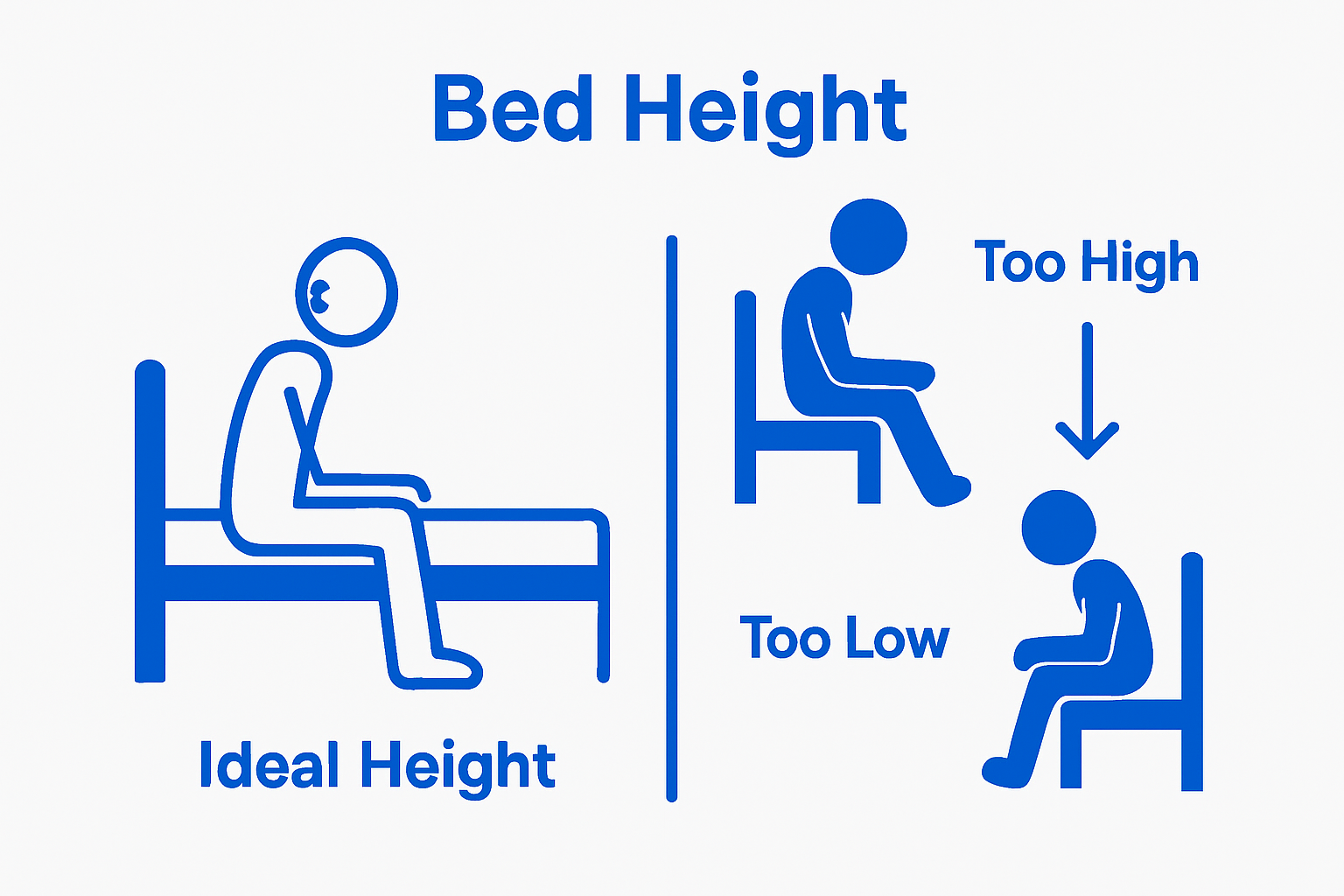 This position provides maximum comfort and minimizes the risk of falls or difficulty moving.
According to research from the National Institute on Aging, proper bed height can significantly reduce fall risks among seniors. The right bed height supports independence and helps maintain muscle strength by enabling easier movement.
If you’re looking to explore bed base options that cater specifically to senior needs, check out our comprehensive guide on bed base selections.
Why Bed Height Matters for Senior Comfort and Safety
Bed height is far more than a design consideration for seniors. It represents a critical factor in maintaining independence, preventing injuries, and supporting overall physical well-being.
Physical Mechanics of Bed Height
The relationship between bed height and a senior’s mobility involves complex biomechanical interactions. Inappropriate bed heights can significantly increase the risk of falls, muscle strain, and potential serious injuries. When a bed is too high or too low, seniors must exert extra physical effort to sit down or stand up, which can lead to potential balance disruptions and muscular stress.
Key physiological challenges related to incorrect bed height include:
- Balance Instability: Beds that are too high prevent seniors from maintaining proper foot placement and balance.
- Muscle Strain: Awkward transfer movements can cause unnecessary stress on joints and muscles.
- Fall Risk: Incorrect bed height increases the likelihood of slips and falls during bed entry and exit.
Safety and Independence Considerations
Proper bed height directly correlates with a senior’s ability to maintain autonomy. Research from Johns Hopkins Medicine indicates that seniors who can independently manage bed transfers experience higher levels of confidence and reduced dependency on caregivers.
The ergonomic design of a bed impacts not just immediate comfort but long-term physical health. Seniors require beds that allow natural, smooth movements without requiring excessive muscular effort or compromising balance.
If you want to explore bed options designed with senior comfort in mind, check out our guide on single and three-quarter bed selections that cater to different mobility needs.
How Bed Height Affects Mobility and Accessibility for Seniors
Bed height is a nuanced architectural element that profoundly impacts seniors’ daily functioning, representing far more than a simple furniture measurement. It serves as a critical interface between physical capability and environmental design.
Biomechanical Impact of Bed Height
The interaction between a senior’s body and bed height involves complex physiological mechanics. Inappropriate bed heights can create significant challenges in movement, potentially transforming a simple action like sitting or standing into a complex and risky maneuver.
Key biomechanical considerations include:
- Muscular Engagement: Incorrect bed heights require additional muscular effort for transfers.
- Joint Stress: Awkward bed heights can increase pressure on hip, knee, and ankle joints.
- Balance Dynamics: Proper bed height enables more stable and controlled movements.
Accessibility and Independence Dynamics
Accessibility is fundamentally about empowering seniors to maintain autonomy and dignity. According to the South African Human Rights Commission, creating environments that support independent living is crucial for senior well-being.
The right bed height acts as a critical enabler of mobility, reducing the physical barriers that might otherwise limit a senior’s ability to move freely. When bed height matches an individual’s physical capabilities, it transforms from a potential obstacle to a supportive element of daily living.

If you’re interested in exploring storage solutions that complement mobility considerations, check out our guide on base beds with storage options.
Through careful design and consideration, bed height becomes more than a measurement it becomes a key strategy for maintaining senior independence and quality of life.
Key Factors to Consider When Choosing Bed Height for Seniors
Selecting the appropriate bed height involves a complex interplay of individual physical characteristics, functional requirements, and long-term health considerations. It is not a one-size-fits-all decision but a personalized approach that demands careful evaluation.
Physical Assessment Criteria
The foundational step in determining ideal bed height involves a comprehensive physical assessment that goes beyond basic measurements. This assessment considers multiple physiological and functional aspects that directly impact a senior’s mobility and comfort.
Critical physical assessment factors include:
- Body Proportions: Measuring lower leg length and overall body height to determine optimal bed height.
- Mobility Range: Evaluating current range of motion in hips, knees, and ankles.
- Strength Levels: Assessing muscle strength and endurance for bed transfers.
Functional Mobility Requirements
Research from the Medical Research Council of South Africa highlights that seniors’ bed height should facilitate smooth, safe transitions while minimizing physical strain. The ideal height allows for natural, effortless movements that do not compromise balance or require excessive muscular engagement.
Understanding individual mobility needs becomes crucial. Some seniors might require lower beds for easier access, while others might benefit from slightly elevated surfaces that reduce the effort needed to sit or stand.
Below is a table summarising the key factors to consider when choosing bed height for seniors, highlighting their impact and importance.
| Assessment Factor | Explanation | Impact on Bed Height Choice |
|---|---|---|
| Body Proportions | Lower leg length and overall height influence optimal bed height | Ensures feet reach floor and promotes stability |
| Mobility Range | Ability of hips, knees, and ankles to move comfortably | Guarantees bed is accessible for transfers |
| Strength Levels | Muscle strength and endurance to move in and out of bed | Determines need for higher or lower beds |
| Use of Assistive Devices | Necessity for compatibility with walkers or wheelchairs | Facilitates ease of transfer and independence |
| Functional Mobility | Ability to perform smooth, safe transitions | Reduces risk of falls and muscle strain |
If you’re exploring mattress options that complement these considerations, read our comprehensive guide on mattress selection for seniors.
Ultimately, choosing the right bed height is about creating a personalized solution that promotes independence, safety, and comfort for each individual senior.
Find Your Ideal Bed Height – Comfort and Safety for Senior Living
Navigating the challenge of finding the right bed height is about more than numbers. It is about ensuring safety, easing bed transfers and giving your loved ones peace of mind. If you or your family member has struggled with muscle strain or worries about falling, you understand why the perfect bed height is key. The article highlighted how a well-chosen bed height supports independence, reduces fall risks and matches individual needs.
Explore our Double Beds collection to start your journey towards safer and more comfortable sleep for seniors.

Do not wait until a simple bedtime routine becomes a daily worry. Take charge of your comfort and well-being today with Comfy Beds. Our beds come in a range of heights and styles specifically crafted for every stage of life. Shop now with our major brands at factory-low prices and enjoy renewed confidence for you or your loved ones.
Frequently Asked Questions
What is the ideal bed height for seniors?
The ideal bed height for seniors typically ranges from 18 to 23 inches from the floor to the top of the mattress, allowing for comfortable sitting with feet flat on the ground.
How can I determine the best bed height for an individual senior?
To determine the best bed height, assess the senior’s physical mobility and individual height, ensuring that when seated, their knees bend at a 90-degree angle with feet touching the floor.
Why does bed height matter for seniors’ safety and comfort?
Proper bed height is crucial for seniors as it minimizes the risk of falls, reduces muscle strain during transitions, and supports independence in daily activities.
What factors should be considered when selecting a bed for a senior?
When selecting a bed for a senior, consider body proportions, mobility range, strength levels, and any assistive devices they may use for easier access and transitions.
