
Did you know that over one in five homes experiences a bed bug problem every year? These stubborn insects can invade even the cleanest bedrooms. Early action makes all the difference when trying to stop a minor issue from turning into a nightmare. With practical advice and proven steps, you can spot, confirm, and tackle bed bugs before they take over your space.
Quick Summary
| Key Point | Explanation |
|---|---|
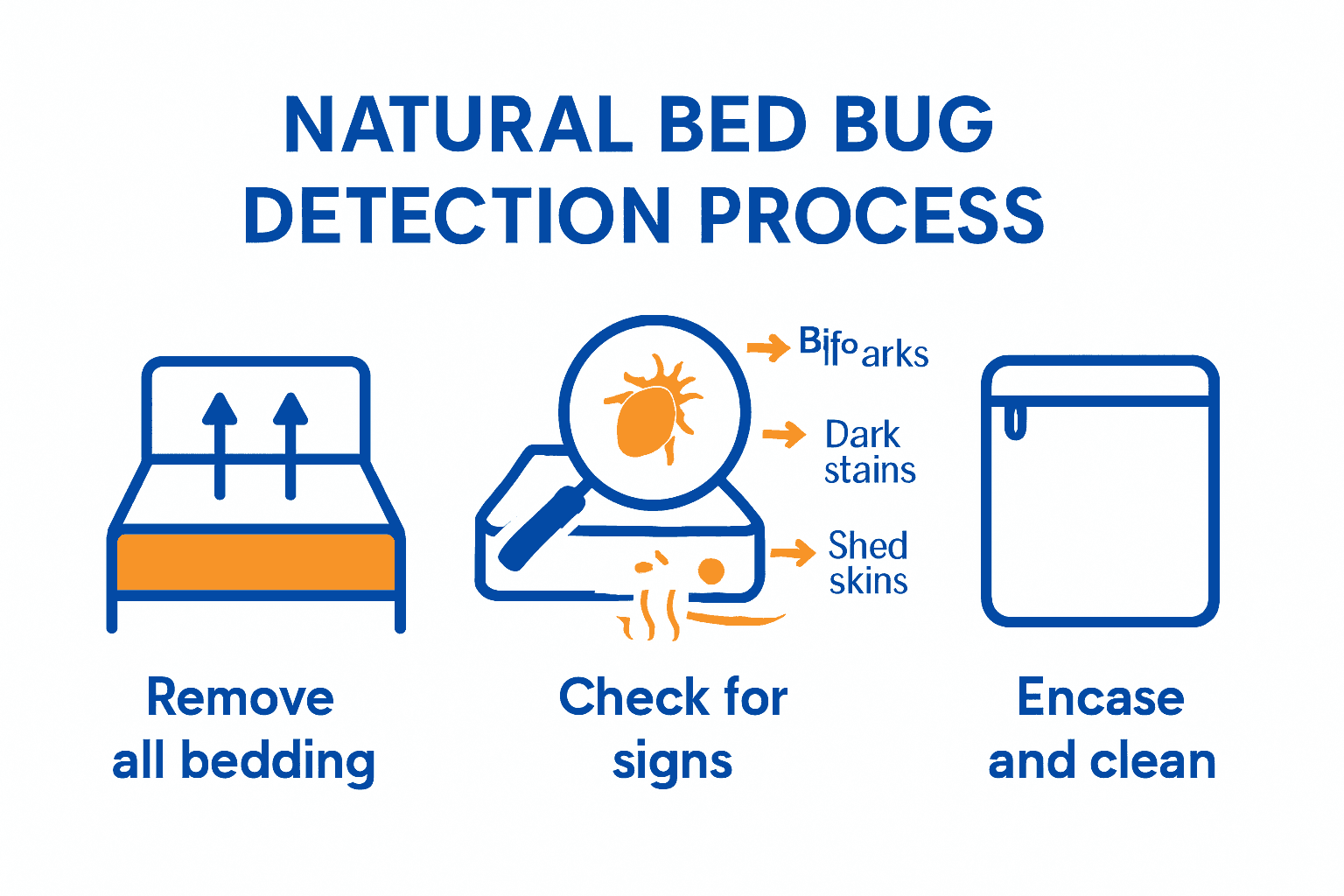
| 1. Completely strip your bed | Remove all bedding to expose the mattress for a thorough bed bug inspection. |
| 2. Look for common bed bug signs | Check for bite marks, dark stains, shed skins, and odors as indicators of bed bugs. |
| 3. Inspect mattresses and furniture | Examine all surfaces, crevices, and joints meticulously for bed bugs and their signs. |
| 4. Check hidden areas thoroughly | Search baseboards, electrical outlets, and nearby furniture to find bed bugs in unexpected spots. |
| 5. Plan immediate next steps | If bed bugs are found, encase bedding, wash linens, and consider professional pest control if necessary. |
 |
|
Table of Contents
- Step 1: Prepare Your Room For Inspection
- Step 2: Identify Common Bed Bug Signs
- Step 3: Inspect Mattresses And Furniture Closely
- Step 4: Check Hidden And Surrounding Areas
- Step 5: Verify Findings And Plan Next Steps
Step 1: Prepare your room for inspection
Preparing your room for a thorough bed bug inspection requires strategic planning and careful attention to detail. Your goal is to create an environment where these tiny pests cannot hide from your watchful eye.
Start by completely stripping your bed. Remove all bedding including sheets, pillowcases, mattress protectors and blankets. According to the KwaZulu-Natal Department of Health, completely exposing your mattress is crucial for a comprehensive inspection.
Next, carefully pull your mattress away from the wall to access all hidden areas. This step gives you a clear view of seams, edges, and potential hiding spots. As research suggests from Brief Research, early detection is critical in controlling a potential infestation.
Pro Tip: Use a bright flashlight and wear light colored clothing during inspection to help spot these small insects more easily.
Carefully examine every surface systematically. Look closely at mattress seams, corners, edges and underneath the mattress. Pay special attention to small crevices where bed bugs might lurk. Remember to check bed frames, headboards and nearby furniture as well.
After your initial inspection, consider using protective encasements recommended by health experts. These special covers can help isolate and prevent further spread if bed bugs are detected.
By following these steps methodically, you’re setting yourself up for a thorough and effective bed bug investigation. Ready for the next phase of detection?
Step 2: Identify common bed bug signsIdentifying bed bug signs early can save you significant stress and prevent a small problem from becoming a major infestation. Your mission in this step is to become a detective of tiny, sneaky insects that love hiding in the most unexpected places.According to EcoSmart Pest Control, there are several telltale signs that bed bugs have invaded your sleeping sanctuary. The most immediate indicator is often a series of clustered red itchy bites appearing on your skin after sleeping. These bites typically appear in small groups or lines and can be intensely irritating.Look for physical evidence around your mattress and bedding. KwaZulu-Natal Health Department recommends checking for distinctive dark or black staining from bed bug excreta. These stains often appear along mattress seams and can look like tiny ink marks or specks.
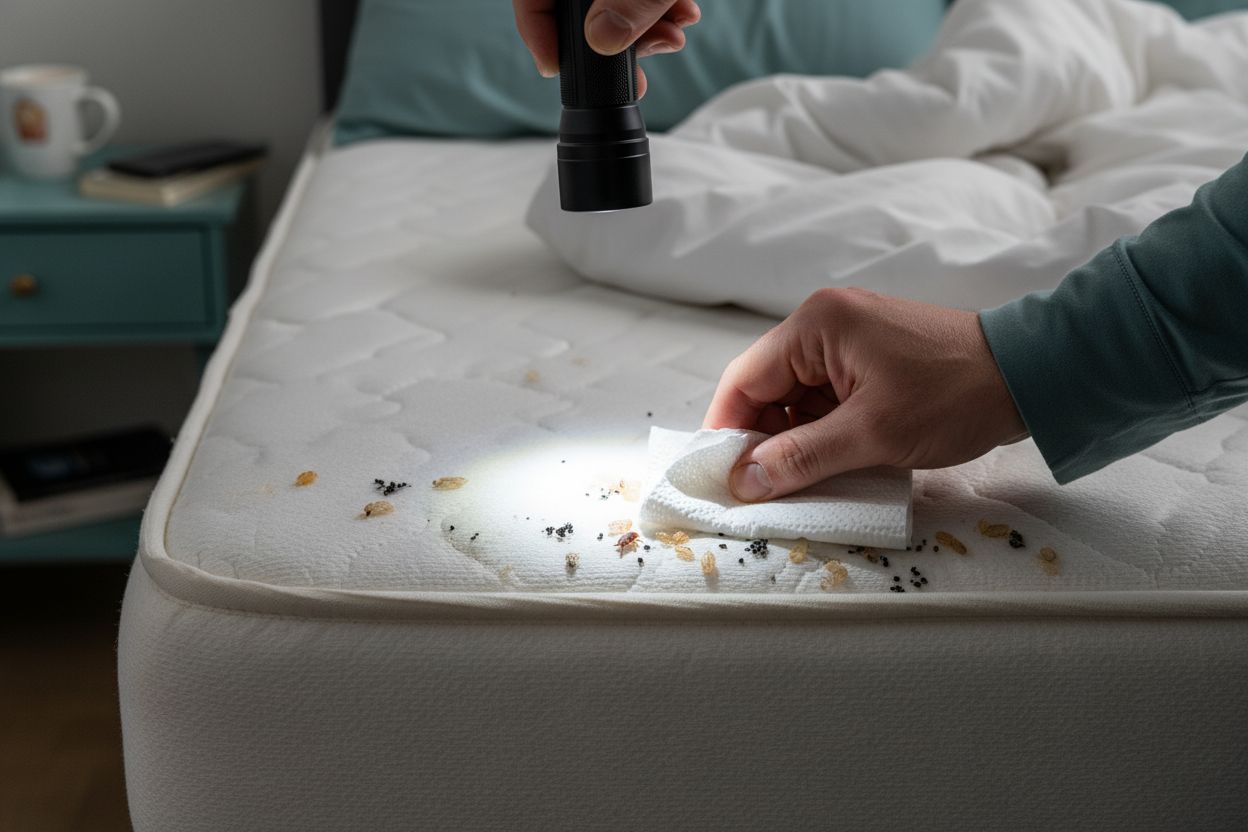 > Pro Tip: Use a white paper towel to help distinguish between regular dirt and actual bed bug evidence. Press the towel against suspicious spots to see if they smear with a reddish-brown color.Another critical sign is the presence of shed skins or tiny eggs. These are usually found in the hidden corners and seams of your mattress. In heavy infestations, you might also detect a musty sweet odour that is distinctly unpleasant and different from normal bedroom smells.Physical insects are the most conclusive evidence. Bed bugs are small reddish-brown flattened insects that love hiding in tight spaces. They are about the size of an apple seed and can often be spotted in mattress seams, bed frames, and nearby furniture crevices.Ready to dig deeper and confirm whether these unwelcome guests have set up camp in your bedroom?
Here’s a summary of the main signs of bed bug presence:
| Sign | Description | Where to Check |
|---|---|---|
| Bite marks | Red, itchy clusters or lines | Exposed skin after sleeping |
| Dark faecal stains | Ink-like black marks | Mattress seams, bed frame |
| Shed skins & tiny eggs | Pale husks, small white eggs | Mattress crevices, bed joints |
| Musty sweet odour | Unusual sweet, unpleasant smell | Bedroom, especially corners |
| Live insects | Reddish-brown, apple-seed size | Mattress seams, furniture |
Step 3: Inspect mattresses and furniture closely
Inspecting your mattress and surrounding furniture is a critical detective mission in your bed bug investigation. Your goal is to uncover these tiny intruders in their most preferred hiding spots.
According to ServiceMaster South Africa, start by completely stripping your bed and examining every inch of the mattress. Pay special attention to seams and areas near the headboard where bed bugs love to congregate.
As recommended by Brief Research, use a thin tool like a credit card or butter knife to probe deeply into mattress seams and corners. Carefully inspect the underside of the mattress and examine every potential hiding spot on your bed frame.
Pro Tip: Work systematically and use good lighting to ensure you do not miss any potential hiding spots.
Focus on specific areas like screw holes, joints, and wood cracks in your bed frame. Look for live bugs, eggs, shed skins, and telltale blood or faecal stains. Do not forget to vacuum thoroughly after your inspection read more about mattress maintenance in our detailed guide on mattress care.
Remember bed bugs are masters of concealment. Take your time and be thorough. Patience is key in detecting these tiny invaders before they can establish a full colony.
Ready to learn how to confirm your findings and take the next steps in bed bug elimination?
Step 4: Check hidden and surrounding areas
Bed bugs are expert hiders with an uncanny ability to disappear into the tiniest spaces. Your mission now is to explore every potential hiding spot beyond the obvious areas of your mattress.
Rentokil South Africa warns that these pesky insects can lurk in numerous unexpected locations. Start by thoroughly examining your bed frame and headboard. Check every crevice, joint, and screw hole meticulously.
According to Hygiene and Bugs, expand your search to surrounding areas. Look closely at baseboards, carpet edges, electrical outlets, and the spaces behind wallpaper. These seemingly innocuous areas can be prime real estate for bed bug colonies.
Pro Tip: Use a bright flashlight and a thin flat tool like a credit card to probe tight spaces and reveal hidden bed bugs.
Don’t overlook furniture near your bed. Inspect bedside cabinets, drawers, and cupboards with the same level of detail. Pay special attention to joints, corners, and any fabric-covered surfaces learn more about comprehensive home maintenance in our mattress care guide.
Remember that bed bugs can spread quickly. A thorough and systematic approach is crucial in detecting and preventing a full-blown infestation. Move slowly and carefully, leaving no potential hiding spot unchecked.
Ready to take the next step in your bed bug detection strategy?
Step 5: Verify findings and plan next steps
You have completed your initial bed bug investigation. Now comes the critical moment of confirming your findings and developing a strategic elimination plan that will protect your home and health.
EcoSmart Pest Control recommends several immediate actions if you confirm a bed bug presence. First, consider encasing your mattress and box springs in specialized zippered bed bug proof covers. These covers will trap existing bugs and prevent new ones from establishing themselves.
According to ServiceMaster South Africa, your next steps should involve thorough cleaning. Wash all linens in hot water above 60 degrees Celsius and dry them in direct sunlight. This combination of heat and UV exposure can effectively eliminate many bed bugs and their eggs.
Pro Tip: Always dispose of vacuum cleaner bags in sealed plastic containers outside your home to prevent potential bug escape.
Consider using additional treatments like diatomaceous earth or essential oils to create barriers. However, for significant infestations, read more about professional pest control strategies in our comprehensive mattress care guide.
If your investigation reveals an extensive infestation, it is crucial to contact a SAPCA approved professional pest control service. They can provide targeted residual insecticidal treatments that address the problem comprehensively.
Stay vigilant and patient. Bed bug elimination is a process that requires consistent effort and strategic planning.
Take Control of Bed Bugs with the Right Mattress Protection
You have just learned how tricky and stressful it can be to detect bed bugs naturally in your mattress. The fear of itchy bites, hidden stains, and sleepless nights is real for many South Africans. But you do not have to accept the sleepless worry or keep fighting a never-ending battle.
Our mattress protectors create a safe barrier between you and unwanted pests. These covers make it much harder for bed bugs to hide or spread. They are easy to clean and designed to give you peace of mind, especially if you have already spotted warning signs covered in the article.

Do not wait for a major infestation. Upgrade your mattress defence today and give yourself a better night’s sleep. Explore the full range of trusted brands and unbeatable prices at Comfy Beds. You deserve a clean, healthy sleep environment. Take action now while solutions are still simple, and let us help you reclaim your bedroom comfort.
Frequently Asked Questions
How can I naturally detect bed bugs in my mattress?
To naturally detect bed bugs in your mattress, start by stripping all bedding and inspecting seams, edges, and corners carefully. Use a bright flashlight to illuminate potential hiding spots and look for signs like dark stains or shed skins.
What are the common signs of bed bugs in mattresses?
Common signs of bed bugs in mattresses include red, itchy bite marks on your skin, dark fecal stains along the seams, and the presence of shed skins or tiny eggs. Check your mattress closely, especially in crevices and seams, to identify these signs quickly.
How do I check for bed bugs in surrounding furniture?
To check for bed bugs in surrounding furniture, inspect bedside tables, drawers, and any fabric-covered surfaces thoroughly. Look for the same signs as in your mattress, such as live bugs, shed skins, and fecal traces in joints and corners.
What immediate actions should I take if I find bed bugs?
If you find bed bugs, immediately encase your mattress in a bed bug-proof cover to trap existing bugs. Follow this by washing all affected linens in hot water to eliminate bed bugs and their eggs within a single washing cycle.
How can I effectively verify my findings after inspecting my mattress?
To verify findings after inspecting your mattress, gather all evidence, such as shed skins or stains, and assess the extent of the signs you observed. Based on your evaluation, develop a targeted plan for elimination, including cleaning and possible professional pest control if the infestation is severe.
Is it necessary to contact a professional pest service if I find evidence of bed bugs?
Yes, contacting a professional pest control service may be necessary if you identify extensive evidence of bed bugs. Professionals can provide comprehensive treatments that are often more effective than DIY approaches in heavy infestations.
