
Most people think working late and doing more will make them productive. Studies show it is actually the hours spent asleep that have the biggest effect. In fact, one in three South Africans is not getting enough quality sleep, leading to a dramatic drop in workplace performance. You might think pulling an all-nighter gets you ahead, but the real shortcut to better results starts with your pillow, not your laptop.
Table of Contents
- The Relationship Between Sleep And Productivity: An Overview
- Why Quality Sleep Is Essential For Optimal Performance
- How Sleep Cycles Affect Your Daily Energy And Focus
- The Impact Of Sleep Environment On Productivity Levels
- Strategies To Improve Sleep For Enhanced Productivity
Quick Summary
| Takeaway | Explanation |
|---|---|
| Sleep is vital for productivity. | Quality sleep significantly impacts cognitive functions essential for work efficiency and decision-making. |
| Prioritise consistent sleep quality. | Regular sleep patterns enhance memory, emotional regulation, and overall performance at work. |
| Create an optimal sleep environment. | A supportive and quiet sleep space improves sleep quality, transforming it into a performance enhancement tool. |
| Apply sleep improvement strategies. | Behavioural changes like consistent sleep schedules and stress management can result in better sleep and productivity. |
| Understand sleep cycles. | Recognising the stages of sleep helps maximise energy and focus throughout the day. |
The Relationship Between Sleep and Productivity: An Overview
Sleep represents a critical yet often overlooked factor influencing human productivity and performance. Understanding the intricate connection between sleep and professional output reveals profound implications for individual and organisational success.
The Biological Foundations of Sleep and Performance
At its core, sleep is not merely a passive state of rest but an active biological process essential for cognitive restoration. Research from the National Sleep Foundation demonstrates that during sleep, our brains consolidate memories, process emotional experiences, and repair cellular damage. These neurological processes directly impact cognitive functions like decision making, creativity, and problem solving.
Key biological mechanisms connecting sleep and productivity include:
- Memory Consolidation: Deep sleep stages enable neural pathways to strengthen, improving information retention
- Emotional Regulation: Adequate sleep helps manage stress responses and maintain psychological equilibrium
- Cognitive Flexibility: Well-rested individuals demonstrate enhanced adaptability and strategic thinking
Performance Implications of Sleep Quality
Quantity and quality of sleep significantly influence professional performance. Workers experiencing consistent sleep disruptions often encounter reduced concentration, slower reaction times, and diminished analytical capabilities.
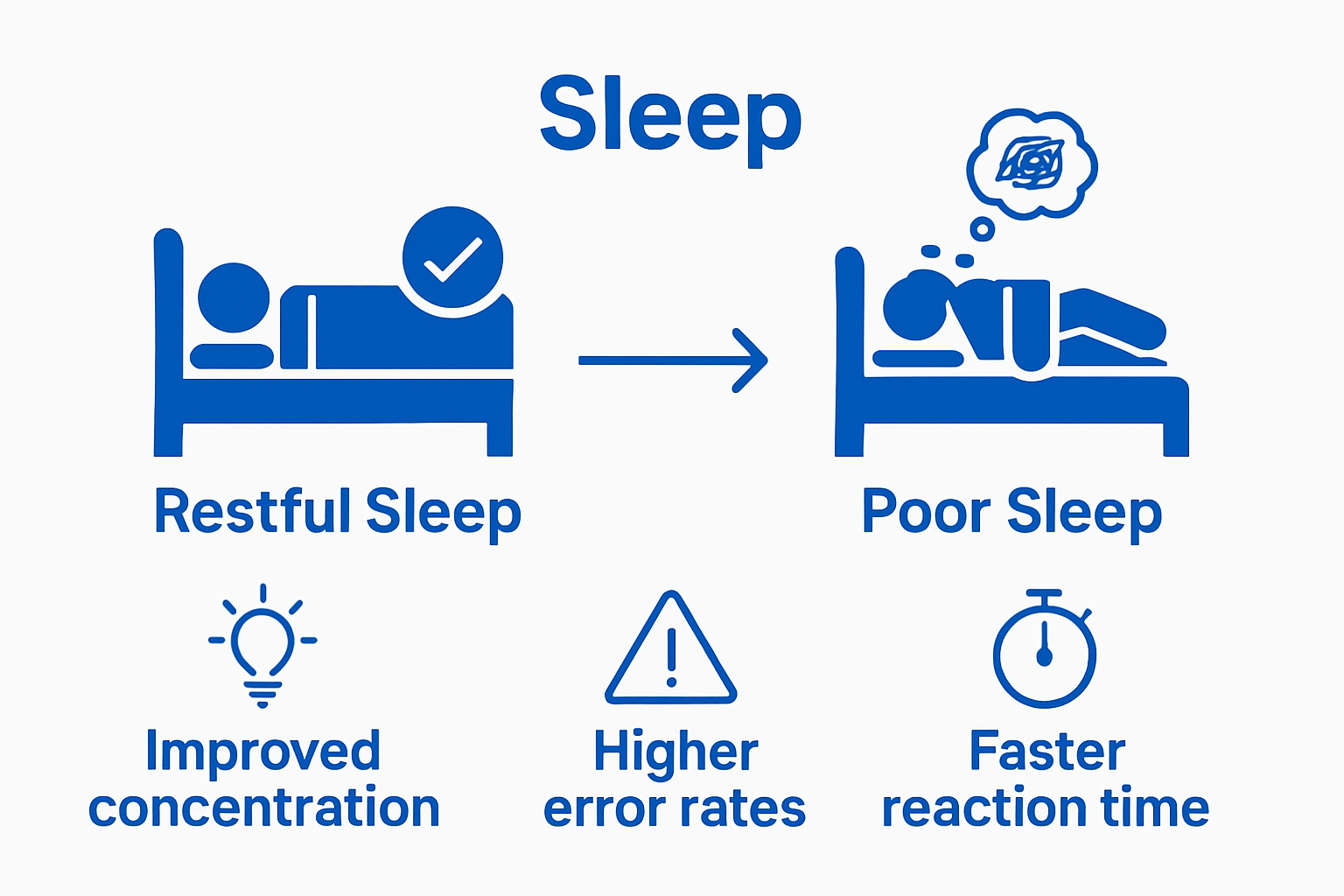
Harvard Medical School research indicates that sleep-deprived employees are more prone to errors and experience substantial productivity losses.
Interestingly, our guide on natural sleep aids can provide additional strategies for improving sleep quality and subsequently enhancing workplace performance.
Ultimately, recognising sleep as a fundamental performance driver transforms how individuals and organisations approach rest and productivity. By prioritising consistent, high-quality sleep, professionals can unlock significant potential for personal and professional growth.
Why Quality Sleep is Essential for Optimal Performance
Quality sleep transcends mere rest. It represents a fundamental biological process critical for peak human performance, enabling comprehensive physical and mental restoration that directly impacts professional effectiveness and personal wellbeing.
The Performance Impact of Sleep Quality
Sleep is not a luxury but a biological necessity for maintaining high performance levels. Research from the National Institutes of Health reveals that consistent, high-quality sleep produces measurable improvements in cognitive function, emotional regulation, and workplace productivity.
Key performance dimensions influenced by sleep include:
- Cognitive Processing: Enhanced mental clarity and faster decision making
- Emotional Stability: Improved stress management and interpersonal interactions
- Physical Energy: Sustained stamina and reduced fatigue during work hours
Neurological Mechanisms of Sleep and Performance
During quality sleep, the brain undergoes critical maintenance processes that directly correlate with professional performance. Neurological research demonstrates that sleep enables complex neural repair, memory consolidation, and emotional processing. These mechanisms reset cognitive systems, preparing individuals for optimal functioning.
Sleep deprivation creates substantial performance deficits. Professionals experiencing interrupted or insufficient sleep encounter decreased concentration, slower reaction times, and diminished problem solving capabilities. Our comprehensive guide to sleep solutions offers strategies for improving sleep quality and maintaining peak performance.
Ultimately, viewing sleep as a strategic performance enhancement tool transforms how individuals approach rest. By prioritising consistent, high-quality sleep, professionals can unlock significant potential for personal and organisational success.
How Sleep Cycles Affect Your Daily Energy and Focus
Sleep is not a uniform state but a complex, dynamic process involving distinct stages that profoundly influence our daily cognitive performance and energy levels. Understanding these intricate sleep cycles reveals how our bodies recharge and prepare for optimal functioning.
The Architecture of Sleep Cycles
Research from the National Institute of Neurological Disorders and Stroke demonstrates that human sleep comprises multiple cyclical stages, each serving unique physiological and neurological functions. A typical sleep cycle progresses through several phases, lasting approximately 90 minutes and repeating multiple times throughout the night.
To help clarify the stages of a typical sleep cycle and their impact on health and productivity, the following table outlines each stage along with its primary effects.
| Sleep Stage | Description | Main Benefits |
|---|---|---|
| Non REM Stage 1 | Light sleep, transition from wakefulness | Initiates rest and signals sleep onset |
| Non REM Stage 2 | Deeper sleep, reduced temperature and heart rate | Helps with physical relaxation |
| Non REM Stage 3 | Deep, restorative sleep | Physical repair and recovery |
| REM Stage | Rapid eye movement, active brain | Cognitive processing and memory |
Key characteristics of sleep cycle stages include:
- Non REM Stage 1: Light sleep where transition from wakefulness occurs
- Non REM Stage 2: Deeper sleep with decreased body temperature and heart rate
- Non REM Stage 3: Deep, restorative sleep critical for physical recovery
- REM Stage: Rapid Eye Movement phase essential for cognitive processing
Impact on Daily Performance
Each sleep cycle stage contributes differently to energy restoration and cognitive function. Deep sleep stages facilitate physical recovery, muscle repair, and hormone regulation, while REM sleep enables critical brain processes like memory consolidation and emotional regulation.
Disruptions in these cycles can significantly impair daytime performance. Individuals experiencing fragmented sleep often report reduced concentration, slower reaction times, and diminished problem solving capabilities. Our comprehensive guide to sleep solutions provides strategies for maintaining consistent, high quality sleep cycles.
Ultimately, recognising sleep as a complex, structured process transforms how we approach rest. By understanding and respecting our natural sleep architecture, we can optimise our daily energy, focus, and overall performance.
The Impact of Sleep Environment on Productivity Levels
The physical space where individuals sleep plays a critical role in determining sleep quality and, consequently, overall workplace performance. Far beyond aesthetic considerations, the sleep environment represents a complex ecosystem influencing neurological restoration and cognitive potential.
Environmental Factors Affecting Sleep Quality
Research from the National Sleep Foundation reveals multiple environmental elements directly impacting sleep efficiency and subsequent productivity. These interconnected factors create a holistic framework determining restorative sleep potential.
This table summarises the most important environmental factors that influence sleep quality, along with their recommended conditions and the effects on productivity.
| Environmental Factor | Recommended Condition | Effect on Productivity |
|---|---|---|
| Temperature | 16-20 degrees Celsius | Enhances sleep efficiency and comfort |
| Light Exposure | Minimal ambient light | Promotes melatonin production, deeper sleep |
| Noise Levels | Consistent, low background noise | Reduces interruptions, aids continuous sleep |
| Mattress Comfort | Supportive, ergonomic surface | Supports sleep quality, reduces next-day fatigue |
Key environmental sleep influencers include:
- Temperature Regulation: Ideal sleeping temperatures between 16 20 degrees Celsius
- Light Exposure: Minimal ambient light promoting melatonin production
- Noise Levels: Consistent, low decibel background environments
- Mattress Comfort: Supportive surfaces matching individual ergonomic needs
Neurological Consequences of Sleep Environment
Suboptimal sleeping conditions trigger physiological stress responses that interrupt natural sleep cycles. Professionals experiencing poor sleep environments encounter reduced cognitive processing, diminished emotional regulation, and increased daytime fatigue. These disruptions manifest as decreased concentration, slower problem solving abilities, and reduced overall workplace effectiveness.
Explore our guide to creating optimal sleep spaces for comprehensive strategies in designing productivity enhancing sleep environments. By understanding and intentionally crafting sleep spaces, individuals can systematically improve their neurological recovery and professional performance.
Ultimately, the sleep environment represents a strategic performance tool. Thoughtful design and continuous optimization of sleeping conditions can transform rest from a passive activity into an active mechanism for professional excellence.

Strategies to Improve Sleep for Enhanced Productivity
Improving sleep quality requires a holistic approach that addresses physiological, environmental, and behavioral factors. Implementing targeted strategies can transform sleep from a passive recovery process into an active performance enhancement mechanism.
Behavioral and Lifestyle Interventions
Research from the Sleep Foundation highlights multiple evidence based strategies for optimizing sleep and subsequent productivity. These interventions focus on creating consistent neurological patterns that support restorative rest.
Key strategic approaches include:
- Consistent Sleep Schedule: Maintaining regular sleep and wake times
- Digital Detox: Limiting screen exposure before bedtime
- Physical Activity: Regular exercise, but not close to bedtime
- Stress Management: Incorporating relaxation techniques like meditation
Physiological Sleep Optimization
Understanding and manipulating physiological triggers can significantly improve sleep quality. Professionals can leverage scientific insights to create conducive conditions for neurological restoration. This involves regulating environmental factors, managing nutritional intake, and understanding individual biological rhythms.
Critical physiological considerations encompass managing caffeine consumption, creating a cool and dark sleeping environment, and avoiding heavy meals before bedtime. These interventions help regulate circadian rhythms and promote deeper, more consistent sleep cycles.
Discover comprehensive sleep improvement techniques for professional performance enhancement. By systematically addressing sleep as a strategic resource, individuals can unlock significant potential for cognitive optimization and workplace effectiveness.
Ultimately, improving sleep is not about duration but quality. Intentional, science backed strategies can transform sleep from a passive recovery process into an active performance enhancement mechanism.
Upgrade Your Sleep to Boost Workplace Success
Are you struggling with feeling tired at work, difficulty focusing, or low energy through your day? As this article shows, both the quality of your sleep and your sleep environment are crucial to achieving real productivity. Problems like an uncomfortable mattress or unsupportive pillow can disrupt your sleep cycle and leave you battling brain fog and fatigue each morning, no matter how many hours you spend in bed. Your journey to better rest and sharper focus can start by improving your sleep space.
Explore our Pillows collection for better nights

Transform the way you feel every day with products chosen for exceptional support and comfort. Visit Comfy Beds to see our full range of top brands at factory-low prices, or browse our Bed Accessories for practical upgrades that won’t just change your sleep, but your life. Make a choice today for better sleep and greater productivity tomorrow.
Frequently Asked Questions
What is the connection between sleep and productivity?
Sleep plays a crucial role in enhancing productivity by allowing the brain to consolidate memories, process emotions, and recover cognitively. Adequate sleep improves concentration, decision-making, creativity, and problem-solving abilities, directly impacting professional performance.
How does sleep quality affect cognitive function?
Quality sleep is essential for optimal cognitive processing. It enhances mental clarity, speeds up decision-making, and helps maintain emotional stability. Poor sleep quality can lead to reduced concentration and slower reaction times, negatively affecting work performance.
What are the key factors that influence sleep quality?
Key factors affecting sleep quality include temperature regulation, light exposure, noise levels, and mattress comfort. Creating an ideal sleep environment with the right temperature and low ambient light can significantly improve sleep efficiency and overall productivity.
What strategies can improve sleep for enhanced workplace performance?
To improve sleep quality, consider maintaining a consistent sleep schedule, limiting screen exposure before bed, engaging in regular physical activity, and managing stress through relaxation techniques like meditation. Additionally, creating a conducive sleep environment can further enhance sleep quality.
Recommended
- Understanding Natural Sleep Aids for Better Rest
- Bed Sets That Redefine Comfort and Luxury
- The Ultimate Bed Shop Haven for Your Dream Bedroom!
- Understanding the Signs You Need a New Mattress
- How to Improve Concentration Naturally in 6 Steps • KIND STRANGER
- Here are some tips for getting a better night’s sleep.
