
Choosing a new mattress in Gauteng can feel confusing when both memory foam and latex make big promises about comfort and support. Sleep experts often argue over the perks and pitfalls, but one thing stands out. Did you know latex mattresses can last up to 15 years, while memory foam usually taps out after just 7 to 10. Most people chase after pressure relief and a soft feel, overlooking how much the right mattress can actually save you in the long run. The obvious choice might not be what you think.
Table of Contents
- Differences Between Memory Foam And Latex
- Comfort, Support, And Durability Factors
- Climate And Allergy Considerations In Gauteng
- Choosing The Right Mattress For Your Needs
Quick Summary
| Takeaway | Explanation |
|---|---|
| Memory foam provides excellent pressure relief. | Ideal for individuals with joint pain due to its contouring properties that minimize pressure points. |
| Latex mattresses are more durable. | High-quality latex options can last up to 15 years, maintaining their supportive integrity longer than memory foam. |
| Consider climate when choosing materials. | Gauteng’s heat retention challenges favor breathable latex over memory foam for cooler sleep quality. |
| Allergies influence mattress choice. | Memory foam is generally hypoallergenic, while natural latex may trigger allergies in sensitive individuals. |
| Match mattress type to sleep profile. | Your body weight and sleeping position determine whether memory foam or latex provides better support and comfort. |
Differences Between Memory Foam and Latex
Choosing between memory foam and latex mattresses requires understanding their unique characteristics and performance attributes. These two popular mattress materials offer distinctly different sleeping experiences, each with specific advantages that cater to different sleeper preferences and needs.
Material Composition and Structure
Memory foam and latex represent two fundamentally different mattress technologies. Memory foam is a synthetic material created from polyurethane with additional chemicals that increase its viscosity and density. This composition allows the material to slowly conform to body weight and temperature, creating a signature “sinking” sensation that cradles the sleeper.
In contrast, latex is derived from natural rubber tree sap or can be synthetically produced. Natural latex mattresses offer a more responsive and bouncy feel compared to memory foam. According to research in the International Journal of Environmental Research and Public Health, latex mattresses provide superior breathability and temperature regulation, which can be crucial for maintaining comfortable sleep conditions.
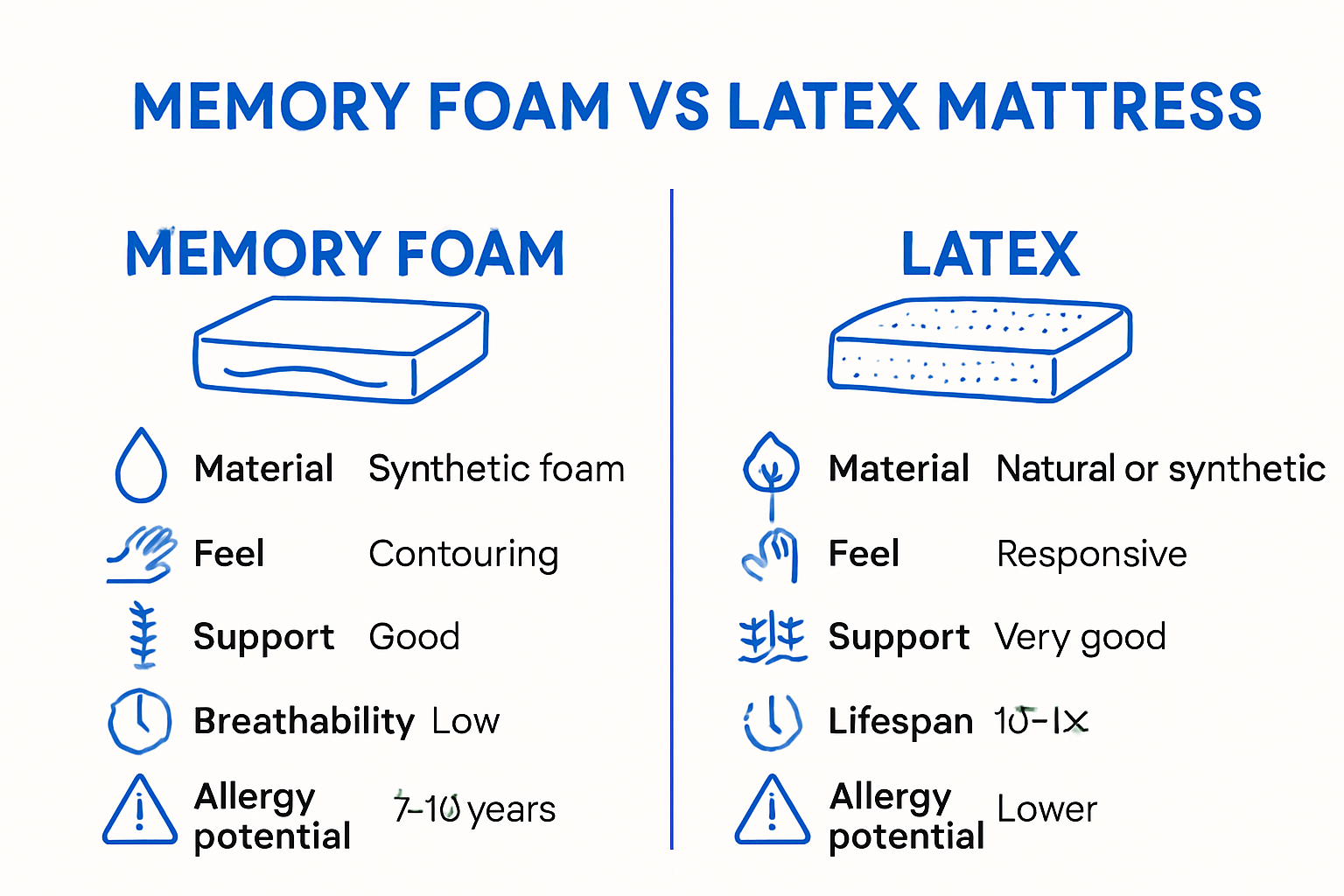
To help readers quickly identify the core differences between memory foam and latex mattresses, here’s a side-by-side comparison of their main characteristics:
| Feature | Memory Foam | Latex |
|---|---|---|
| Material Source | Synthetic polyurethane & chemicals | Natural rubber sap or synthetic latex |
| Feel | Conforming, “sinking” sensation | Responsive, bouncy, less sink-in |
| Temperature Regulation | Tends to retain heat | Superior breathability; dissipates heat well |
| Motion Isolation | Excellent | Good, but more bounce |
| Durability (Lifespan) | 7–10 years | Up to 15 years |
| Allergen Potential | Generally hypoallergenic | Natural latex may trigger allergies in sensitive individuals |
| Price Range | Generally lower to mid-range | Usually higher, especially for natural latex |
Performance and Comfort Characteristics
The performance differences between memory foam and latex are significant. Memory foam excels in pressure point relief, making it ideal for individuals with joint pain or those who prefer a mattress that closely contours to their body shape. The material absorbs movement exceptionally well, which means minimal motion transfer between sleep partners.
Latex mattresses, by comparison, offer more immediate responsiveness and a more buoyant feel. As highlighted in a 2021 review published in the journal Buildings, latex provides robust support and maintains its structural integrity over time. This characteristic makes latex mattresses particularly suitable for sleepers who prefer a more supportive and less “sinking” sleep surface.
Durability and Longevity Considerations
When evaluating mattress materials, durability plays a critical role. Memory foam mattresses typically have a lifespan of 7-10 years, depending on quality and usage. They can be prone to permanent indentations and may lose their supportive properties more quickly in high-temperature environments.
Latex mattresses generally offer superior longevity, with high-quality natural latex mattresses potentially lasting up to 15 years. Their resilient structure resists permanent compression and maintains consistent support over extended periods. The natural elasticity of latex contributes to its ability to quickly return to its original shape after pressure is removed, ensuring consistent comfort and structural integrity throughout its lifecycle.
Understanding these fundamental differences empowers consumers to make informed decisions based on their specific sleep preferences, body types, and comfort requirements.
Comfort, Support, and Durability Factors
Selecting the right mattress involves a nuanced understanding of comfort, support, and durability factors that directly impact sleep quality and long-term user satisfaction. Memory foam and latex mattresses offer unique attributes that significantly influence these critical performance dimensions.
Body Contouring and Pressure Relief
Comfort begins with how a mattress responds to individual body contours and weight distribution. Supportive mattress technologies play a crucial role in this dynamic. According to research published in Sleep Science, memory foam demonstrates exceptional body contouring capabilities. Its viscoelastic properties allow the material to precisely adapt to body shape, creating a personalized sleeping surface that minimizes pressure points and supports natural spinal alignment.
Latex mattresses approach comfort differently. While they provide substantial support, latex offers a more responsive and slightly bouncy feel compared to memory foam. This characteristic means latex mattresses quickly adjust to movement, making them ideal for sleepers who prefer a more elastic and less “sinking” sensation.
Temperature Regulation and Breathability
Temperature management is a critical comfort factor often overlooked by mattress buyers. Research from the International Journal of Environmental Research and Public Health highlights significant differences in heat retention between memory foam and latex materials. Memory foam tends to trap body heat due to its dense cellular structure, which can cause discomfort for individuals who sleep warm. This heat retention can be particularly challenging in warmer climates like Gauteng, where temperatures can rise significantly.
Latex mattresses, especially those made from natural materials, offer superior breathability. Their open-cell structure allows for enhanced air circulation, helping to dissipate heat more effectively. This makes latex an excellent choice for sleepers seeking a cooler, more temperature-neutral sleeping environment. The improved airflow not only enhances comfort but also contributes to a more hygienic mattress surface by reducing moisture accumulation.
Long-Term Performance and Durability
Durability represents a critical investment consideration for mattress buyers. Memory foam mattresses typically have a lifespan of 7-10 years, with performance potentially degrading faster in high-temperature or high-humidity environments. The material can develop permanent indentations and lose its supportive characteristics over time, especially in areas of consistent body weight concentration.
Latex mattresses demonstrate remarkable longevity and structural resilience. High-quality natural latex mattresses can maintain their supportive properties for up to 15 years, significantly outperforming memory foam in long-term durability. The inherent elasticity of latex allows the material to quickly return to its original shape after pressure is applied, resisting permanent compression and maintaining consistent support throughout its lifecycle.
Understanding these nuanced comfort, support, and durability factors empowers consumers to make informed mattress selections that align with their specific sleep preferences, body types, and environmental conditions. Each material offers distinct advantages, and the optimal choice depends on individual sleep requirements and personal comfort preferences.
Climate and Allergy Considerations in Gauteng
Gauteng’s unique climate and environmental conditions present specific challenges when selecting the right mattress. The region’s variable temperatures and potential allergen exposure require careful consideration of mattress materials to ensure optimal comfort, health, and sleep quality.
Temperature Management and Climate Adaptation
The Gauteng climate demands mattress materials that can effectively manage heat and provide consistent comfort. According to Medical News Today, memory foam tends to retain heat due to its dense cellular structure, which can be particularly challenging during Gauteng’s warmer months. This heat retention can lead to uncomfortable sleeping conditions and disrupted rest.
Latex mattresses offer a more breathable alternative. Read our guide on mattress ventilation to understand how these materials manage temperature. The open-cell structure of latex allows for superior air circulation, helping to dissipate body heat more effectively. This natural cooling property makes latex particularly well-suited to Gauteng’s sometimes intense temperature fluctuations, providing a more consistent and comfortable sleep environment.
Allergy and Respiratory Sensitivity Considerations
Allergy management is a critical factor in mattress selection, especially in an urban environment like Gauteng. Research comparing mattress materials reveals important distinctions between memory foam and latex in terms of allergen resistance. Memory foam’s dense structure provides a significant advantage by creating a less hospitable environment for dust mites, pet dander, and other common allergens.
However, latex mattresses come with a crucial caveat. Individuals with latex allergies must exercise extreme caution. Natural latex can trigger severe allergic reactions in sensitive individuals, making it potentially unsuitable for those with known latex sensitivities. Memory foam presents a hypoallergenic alternative that can provide peace of mind for allergy sufferers.
Pressure Relief and Comfort in Variable Conditions
Beyond temperature and allergen considerations, mattress performance in changing environmental conditions is paramount. A comprehensive scientific study demonstrated that latex mattresses can reduce peak body contact pressure by up to 35.1% across different sleeping postures. This finding is particularly relevant for Gauteng residents who may experience varied sleeping conditions due to climate and lifestyle factors.
Memory foam offers its own unique advantages in pressure distribution. Its ability to conform precisely to body contours provides targeted support that can be beneficial for individuals experiencing muscle tension or joint discomfort. This characteristic becomes especially important in a region with active lifestyles and varying environmental stressors.
To summarise how Gauteng’s climate and common health considerations impact mattress choices, see the table below:
| Consideration | Memory Foam | Latex |
|---|---|---|
| Heat Retention | Can retain heat (uncomfortable in warm climate) | Excellent breathability, ideal for Gauteng heat |
| Allergen Resistance | Hypoallergenic, good for dust/pet dander allergy | May cause issues for those with latex sensitivities |
| Pressure Relief | Conforms closely to body shape; great relief | Reduces pressure up to 35.1%; bouncy & supportive |
| Suitability for Allergies | Excellent except for heat-sensitive users | Excellent unless you have a latex allergy |
Ultimately, the choice between memory foam and latex in Gauteng depends on individual needs, specific health considerations, and personal comfort preferences. Consumers must weigh factors such as temperature management, allergen resistance, and overall sleep comfort when making their selection. Understanding these nuanced considerations ensures a more informed and satisfying mattress investment that supports healthy, restful sleep in Gauteng’s dynamic environment.
Choosing the Right Mattress for Your Needs
Selecting the perfect mattress is a highly personal journey that requires careful consideration of individual sleep preferences, physical requirements, and lifestyle factors. Understanding the nuanced differences between memory foam and latex mattresses can help you make an informed decision that promotes optimal sleep quality and overall well-being.
Individual Sleep Profile and Physical Needs
Your unique sleep profile plays a crucial role in mattress selection. Learn more about personalized sleep solutions to understand how different materials cater to specific needs. According to research published in Healthcare, factors such as body weight, sleep position, and existing health conditions significantly influence mattress performance. Memory foam excels for individuals experiencing chronic pain, offering exceptional pressure relief and even weight distribution. Its ability to contour precisely to body shape provides targeted support for joints and muscles.
Latex mattresses, in contrast, offer a more responsive and bouncy feel that suits sleepers who prefer a firmer, more supportive surface. Individuals with active lifestyles or those who frequently change sleeping positions might find latex more accommodating due to its quick-response properties. The material’s natural resilience ensures consistent support across different body areas, making it an excellent choice for those seeking a more dynamic sleep experience.
Health Considerations and Material Sensitivities
Health and material sensitivities are critical factors in mattress selection. Mayo Clinic’s medical guidance emphasizes that no single mattress type is universally ideal. Memory foam presents a hypoallergenic option for individuals with respiratory sensitivities, creating a less hospitable environment for dust mites and allergens. Its dense structure helps minimize potential irritants that could disrupt sleep.
For those with latex allergies, memory foam becomes an especially attractive option. However, individuals with specific skin sensitivities or heat regulation concerns should carefully consider their options. Latex mattresses offer natural breathability and temperature regulation, which can be beneficial for sleepers who tend to overheat. The open-cell structure of latex promotes air circulation, potentially providing a cooler and more comfortable sleep environment.
Long-Term Comfort and Investment Strategy
Choosing a mattress is fundamentally an investment in your health and well-being. Consider not just immediate comfort but long-term performance and durability. Memory foam mattresses typically offer a lifespan of 7-10 years, providing consistent support through their ability to maintain shape and pressure distribution. The material’s adaptive qualities ensure continued comfort across changing body conditions and weight fluctuations.
Latex mattresses demonstrate remarkable longevity, with high-quality versions potentially lasting up to 15 years. Their natural resilience and ability to quickly return to original shape make them a robust long-term investment. Consumers should evaluate their budget, expected usage, and personal comfort preferences when making this significant decision.
Ultimately, the right mattress is a deeply personal choice that requires thoughtful consideration. By understanding the unique characteristics of memory foam and latex, assessing your individual sleep needs, and considering factors like health, comfort, and long-term performance, you can make an informed decision that transforms your sleep experience. Remember that comfort is subjective, and what works perfectly for one person may not be ideal for another.
Frequently Asked Questions
What are the main differences between memory foam and latex mattresses?
Memory foam is a synthetic material that conforms closely to your body, offering excellent pressure relief, while latex mattresses are made from natural rubber or synthetic materials, providing a more responsive and bouncy feel. Additionally, latex is typically more durable, lasting up to 15 years compared to memory foam’s 7-10 year lifespan.
Which mattress is better for hot climates like Gauteng?
Latex mattresses are generally better for hot climates like Gauteng because they are more breathable and dissipate heat effectively, ensuring a cooler sleeping experience. In contrast, memory foam tends to retain body heat, which can be uncomfortable in warmer conditions.
Are memory foam mattresses good for people with allergies?
Yes, memory foam mattresses are generally hypoallergenic and resistant to dust mites and other common allergens, making them a good choice for allergy sufferers. However, individuals with latex allergies should avoid latex mattresses, which can trigger allergic reactions.
How do I choose the right mattress based on my sleep profile?
To choose the right mattress, consider your body weight, sleeping position, and any existing health conditions. Memory foam is ideal for those seeking pressure relief and support for joint pain, while latex may be better for individuals who prefer a firmer feel and a more responsive surface.
Discover Your Perfect Mattress Match in Gauteng
Still unsure whether memory foam or latex is right for your unique sleep needs? The article highlighted just how Gauteng’s heat and allergy challenges can impact your comfort and long-term well-being. Cold nights, hot summers, and respiratory concerns all mean one thing: you need a mattress that truly fits both your body and your climate. At Comfy Beds, we understand that you want lasting support and cool, restful nights without breaking the bank.
Stop guessing and start sleeping better today. With our factory-low prices on leading mattress brands, finding the best memory foam or latex mattress for your lifestyle is both affordable and simple. Visit Comfy Beds for expert assistance and see how the right mattress can transform your rest. Take the next step towards a healthier, more comfortable sleep now—for yourself and your family.
